

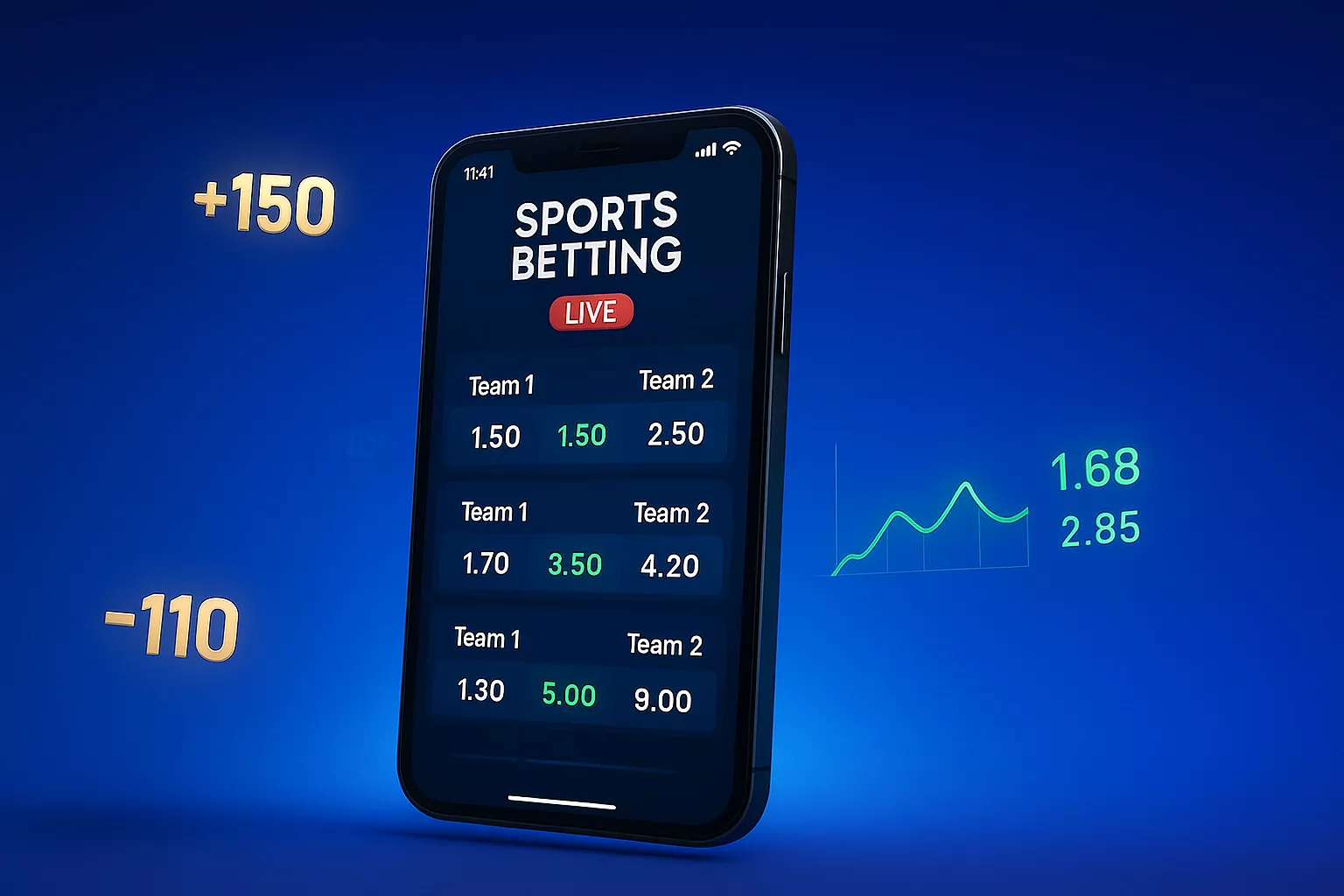
Why Understanding Bookmakers Matters
Sports betting in America exploded from near-prohibition to a multi-billion-dollar industry in less than a decade. In 2018, the Supreme Court struck down PASPA, the federal ban that had restricted legal sports betting to Nevada for twenty-five years. Since then, thirty-nine states have legalized sports betting in some form, and the numbers keep climbing. Mobile betting apps now process more wagers than Las Vegas sportsbooks ever did at their peak.
This rapid expansion created unprecedented access, but it also created confusion. Most bettors don't understand how bookmakers actually operate—the mechanics behind the odds they see on their screens, the business model that keeps bookies profitable even when they lose big bets, or the difference between legitimate operators and sketchy offshore sites that won't pay out.
The term "bookie" itself carries baggage from decades of illegal bookmaking, conjuring images of shadowy figures in smoky backrooms. Modern bookmakers are regulated businesses operating under state gaming licenses, using sophisticated algorithms and massive teams of traders. Understanding this difference matters if you want to bet intelligally rather than throwing money into the void and hoping for the best.
This guide explains the essential mechanics: what a bookie actually is, how they set odds and manage risk, what types of bets you can place, the current legal landscape across US states, the differences between online and offline betting, and how to evaluate which bookmaker deserves your business. Whether you're placing your first bet or your thousandth, understanding the system gives you an edge.
The house always has an advantage—that's the nature of gambling. But informed bettors minimize that edge through strategic choices. Knowledge doesn't guarantee winning, but ignorance guarantees losing more than necessary. Let's start with the basics: what exactly is a bookie?
What is a Bookie? Beyond the Stereotype
A bookmaker, commonly called a bookie or sportsbook, is any person or organization that accepts bets on sporting events. That's the simple definition. The reality involves layers of complexity, from the mathematical models that generate odds to the regulatory frameworks that determine legality.
The term originates from early bookmakers literally writing bets in ledger books—keeping track of who wagered what on which horses. Even though modern bookmaking happens through apps and algorithms, the fundamental concept remains: someone offers odds on an event, accepts wagers from bettors, collects losing bets, and pays winning bets.
Modern legal bookmakers in the United States operate nothing like the stereotypical bookie taking action in a back alley. Companies like DraftKings, FanDuel, BetMGM, and bet365 are massive corporations with technology teams, compliance departments, marketing budgets in the hundreds of millions, and strict regulatory oversight from state gaming commissions. They're publicly traded companies (or subsidiaries of them) with shareholders, quarterly earnings calls, and legal obligations to operate transparently.
Illegal bookmakers still exist, operating outside regulatory frameworks and offering services to bettors in states where sports betting remains prohibited. These operations range from small-scale individuals taking action from friends and local gamblers to organized crime-connected operations running significant business volumes. The risks of using illegal books include no recourse if they refuse to pay, no consumer protections, and potential legal consequences for participating in illegal gambling.
The distinction between bookmaker and bettor is crucial: the bookie doesn't gamble. A bettor risks money hoping to win based on predicting outcomes correctly. A bookmaker sets prices (odds) and takes positions on both sides of bets, aiming to guarantee profit regardless of which side wins. This difference in business model explains why bookmakers can consistently profit while most bettors lose over time.
Bookmakers serve as intermediaries in betting markets, similar to how stock exchanges facilitate trading between buyers and sellers. They provide liquidity, set prices based on market information, and profit from the spread between what they take in and what they pay out. Understanding this role helps frame realistic expectations: you're not outsmarting the bookmaker by winning a bet any more than you're outsmarting Nasdaq by buying stock that increases in value.
How Bookies Work: The Business Model Explained
Bookmakers don't win by predicting outcomes better than bettors. They win by managing markets and maintaining a mathematical edge regardless of results. This business model, refined over centuries, guarantees profit as long as they set odds correctly and balance their books.
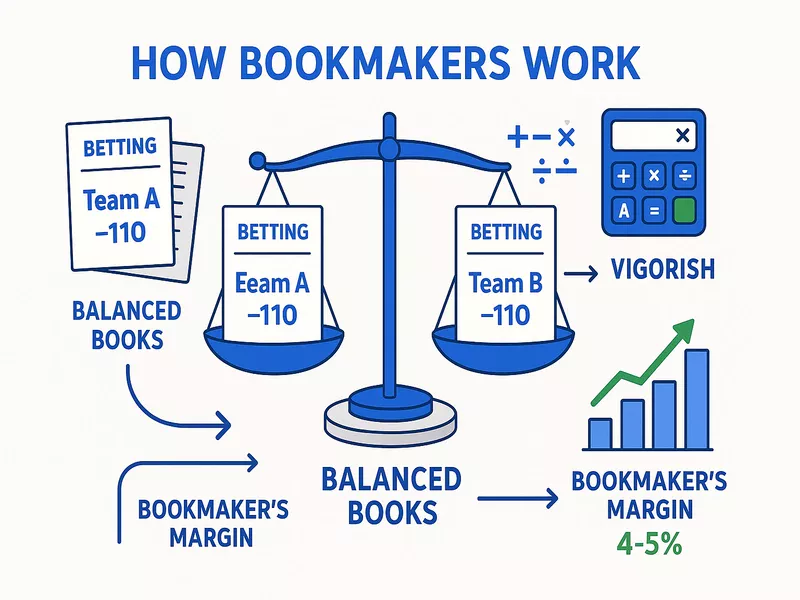
The key mechanism is the vigorish, commonly called the "vig" or "juice." This built-in commission on every bet creates the house edge. In a fair market with two equally likely outcomes, odds would be 2.00 in decimal format (or +100 in American odds)—bet ten dollars, win ten dollars. Bookmakers instead offer odds of 1.91 (-110 in American format), meaning you risk eleven dollars to win ten. This difference is the vig.
On a balanced book with equal action on both sides of a bet, the bookmaker collects the losing bets and pays the winning bets, keeping the difference (the vig) as profit. If a thousand people bet eleven dollars each on Team A at -110 odds and another thousand bet eleven dollars on Team B at -110, the bookmaker holds twenty-two thousand dollars in total action. Whichever team wins, they pay out approximately twenty thousand dollars to winners (eleven thousand times 1.91), keeping roughly two thousand dollars—about a nine percent margin before operating expenses.
Balancing the book—ensuring relatively equal money on both sides—is the bookmaker's primary goal. They achieve this through odds adjustments. If too much money comes in on one side, they'll move the line to encourage bets on the other side. If the Patriots open at -7 and sharp bettors immediately pound that number, the book might move it to -7.5 or -8, making the Patriots less attractive and the underdog more enticing.
Market efficiency makes balancing books easier on popular markets and harder on obscure ones. NFL games attract massive betting volumes from both recreational and professional bettors, creating natural balance. A Tuesday afternoon tennis match between two players ranked outside the top hundred draws minimal action, leaving the bookmaker more exposed to risk if someone with inside information places a large bet.
Risk management strategies extend beyond moving lines. Books limit maximum bet sizes, particularly from successful bettors. If you consistently win, they'll reduce how much they'll accept from you, sometimes drastically. Some books ban winning bettors entirely, though this practice varies by operator and state regulations.
Bookmakers employ teams of traders and oddsmakers who set opening lines, monitor betting patterns, and adjust prices throughout the day. Large operations like DraftKings have hundreds of people dedicated to these functions. They use sophisticated algorithms that incorporate historical data, current form, injuries, weather, and countless other variables. They also watch what sharp bettors (professional or highly skilled gamblers) are betting, using that as signal about where the "true" odds should be.
The speed of modern betting adds complexity. Live betting, where odds update continuously during games based on what's happening, creates thousands of mini-markets within a single event. AI and machine learning models now handle much of this real-time pricing, though human traders still oversee and intervene when patterns look unusual or when significant money hits a line.
Types of Bets: From Moneylines to Parlays
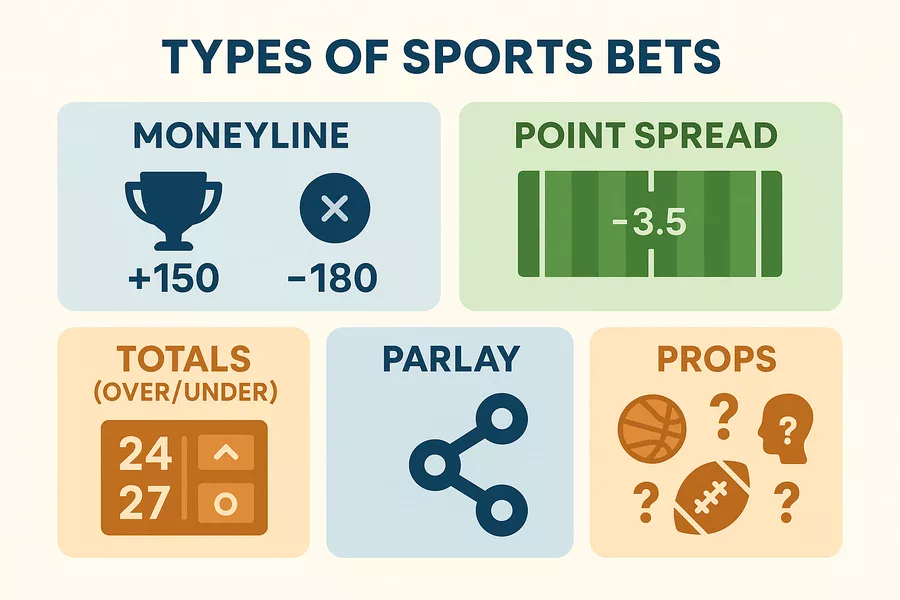
Sports betting offers numerous ways to wager on outcomes, each with different risk-reward profiles and complexities. Understanding these bet types helps you choose strategies matching your risk tolerance and perceived edges.
Moneyline Bets
Moneyline betting is the simplest form: pick which team wins, no point spreads involved. Odds reflect the perceived probability of each outcome. A favorite might be listed at -200, meaning you risk two hundred dollars to win one hundred. An underdog at +170 means a hundred-dollar bet pays one hundred seventy dollars in profit.
Moneylines work well when strength disparities are clear but not overwhelming. Heavy favorites (say, -500 or higher) offer minimal reward for the risk. You tie up significant money to win little, and upsets happen often enough to make these bets dangerous despite the high implied probability of success.
Point Spread Bets
Point spreads level the playing field by giving the underdog a head start or requiring the favorite to win by a certain margin. If the Chiefs are -7 against the Broncos, they must win by more than seven points for Chiefs bets to win. Broncos backers win if Denver loses by fewer than seven or wins outright. Both sides usually carry -110 odds, the standard vig.
Spreads dominate NFL and NBA betting because they create roughly 50/50 propositions even in mismatched games. A team might be a huge favorite on the moneyline but only giving seven points, making the spread bet interesting where the moneyline offers little value.
The half-point matters. A spread of -7 can land on seven, resulting in a push (tie) where bets are refunded. A spread of -7.5 eliminates that possibility—the favorite must win by eight or more. Books often price these differently, with the hook (half-point) sometimes costing extra juice.
Totals (Over/Under)
Totals betting involves wagering whether the combined score will be over or under a number set by the bookmaker. If the Lakers-Heat total is 215.5, you bet whether the final combined score exceeds or falls short of that number. This bet type is outcome-independent—you don't care who wins, only about the scoring volume.
Weather heavily impacts totals in outdoor sports. Wind and cold decrease NFL scoring; books adjust totals accordingly. Smart bettors monitor weather forecasts and bet overs when conditions improve after the line opens or unders when conditions worsen.
Parlays
Parlays combine multiple bets into one ticket, requiring all selections to win for the bet to pay. The payouts compound, offering large returns on small stakes. A three-team parlay at standard -110 odds pays roughly 6-to-1. A ten-team parlay might pay 600-to-1 or more.
Books love parlays because the house edge compounds with each added leg. If you're a fifty percent bettor against the spread (the long-term average for most people), your chances of hitting a three-team parlay drop to 12.5 percent even though the payout is only 6-to-1. The expected value is awful unless you have legitimate edges on multiple games.
Same-game parlays, where all bets come from a single game, grew popular with mobile betting. You might parlay the Chiefs to cover, Mahomes over 2.5 touchdown passes, and the total to go over. These often have worse odds than traditional parlays because bookmakers can adjust for correlation between the bets.
Proposition Bets
Prop bets cover anything not directly related to final scores or game outcomes. Who scores first? Will a player record over or under a certain number of yards, points, rebounds? Will there be a safety? These markets offer entertainment value and sometimes exploitable inefficiencies, especially in player props where information advantages matter.
Books set limits on prop bets lower than on main markets. A sharp bettor with inside injury information might find value in player props before the line moves, but they can't bet enough to make it worthwhile, limiting their ability to exploit that edge.
Futures
Futures bets settle far in the future—who wins the Super Bowl, NBA Championship, World Series. These tie up money for months, and odds shift as the season progresses. Early-season futures sometimes offer value if you correctly identify a team the market underrates, but you sacrifice liquidity by locking money in a bet that won't resolve for months.
Legal Landscape: Where Can You Legally Bet?
Sports betting legality in the United States is complex, varying by state and changing constantly as more jurisdictions legalize. Understanding the legal framework matters both for ensuring you're betting legally and for identifying legitimate operators versus risky alternatives.
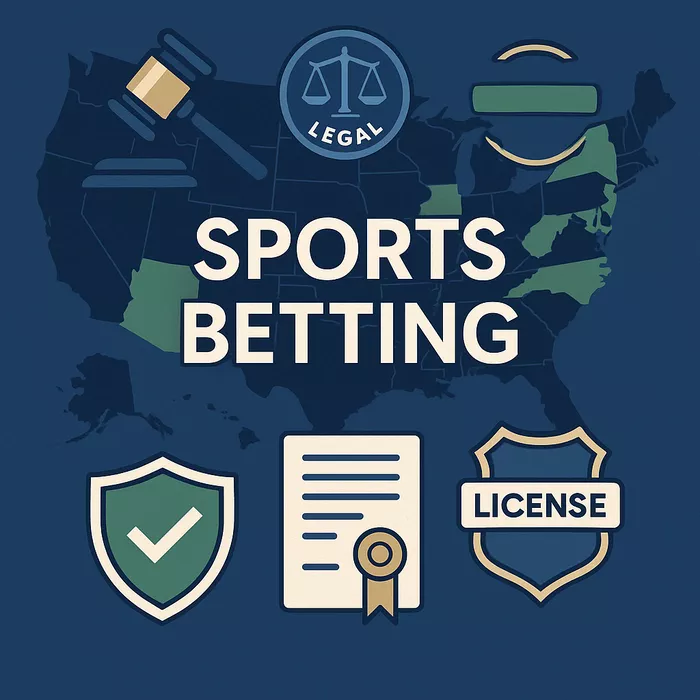
The Professional and Amateur Sports Protection Act of 1992 effectively banned sports betting nationwide except in Nevada, which had been grandfathered in. For twenty-six years, Nevada was the only state offering legal sports betting, creating a monopoly that pushed betting elsewhere—mostly to illegal bookmakers and offshore online sites operating in regulatory gray zones.
In 2018, the Supreme Court struck down PASPA in Murphy v. NCAA, ruling that the federal government couldn't prohibit states from legalizing sports betting. This decision opened the floodgates. New Jersey, which had challenged the law, launched sports betting immediately. Delaware and Mississippi quickly followed. By 2026, thirty-nine states plus Washington DC and Puerto Rico have legalized sports betting in some form.
State-by-state variation creates a patchwork of rules. Some states allow only retail betting at casinos or racetracks. Others permit online betting through mobile apps. Some require in-person registration before you can bet online. Some states ban betting on in-state colleges; others allow it. Tax rates on betting revenue range from minimal to punitive, affecting how aggressively operators compete in each market.
The largest legal markets are New York, New Jersey, Pennsylvania, Illinois, and Nevada. New York alone generates more sports betting revenue than any other state despite having higher tax rates than most, simply due to population density and betting culture. New Jersey, first out of the gate after PASPA's repeal, maintained an early lead but New York's market eclipsed it after launching online betting in 2022.
Ongoing legalization efforts in states like California, Texas, and Florida would massively expand the legal market. California represents the largest untapped market, but multiple ballot initiatives have failed due to conflicts between tribal casinos, commercial operators, and various interest groups. Texas has similar potential but faces political resistance. Florida's legal situation remains murky following compact disputes between the state and Seminole Tribe.
Offshore sportsbooks operating from jurisdictions like Curaçao, Costa Rica, or Malta still serve US customers despite existing in legal gray areas. These sites aren't licensed by US gaming commissions and don't pay US taxes. While federal law doesn't explicitly criminalize placing bets with offshore books, it's a legal risk and a financial one—if they refuse to pay out, you have essentially no recourse.
The advantage of legal, regulated books extends beyond legal protection. State-licensed operators must maintain segregated accounts for customer funds, undergo regular audits, prove their random number generators are fair, implement responsible gambling tools, and face consequences for rule violations. Offshore books operate with no such oversight.
Federal legislation remains unlikely despite periodic proposals for nationwide regulation. The current state-by-state approach creates inefficiencies—operators must navigate thirty-nine different regulatory regimes, geo-location technology ensures bettors are physically located in legal states when betting, and cross-border issues complicate matters. But the tax revenue states collect from sports betting makes unified federal regulation politically difficult.
Online vs Offline Betting: The Shift to Digital
The transition from brick-and-mortar betting shops to mobile apps represents the most significant change in sports betting since legalization. In states with both retail and online options, mobile betting consistently accounts for eighty to ninety percent of handle (total money wagered). This shift fundamentally changed how people bet, when they bet, and what they bet on.
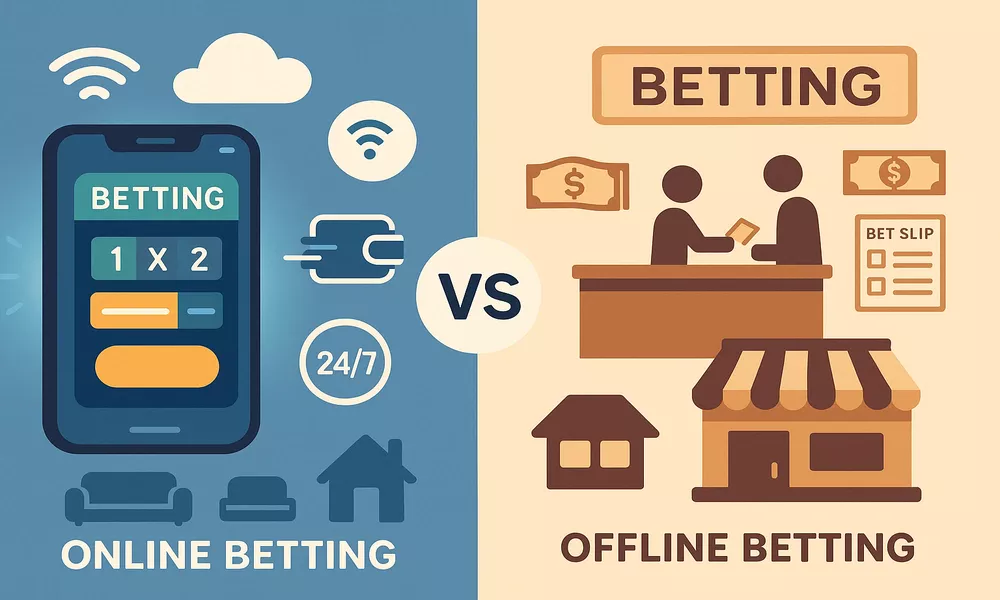
Online betting's convenience drives its dominance. You can place bets from your couch, at the stadium watching the game, or anywhere else with internet access. Registration takes minutes. Deposits are instant through credit cards, debit cards, PayPal, or other payment methods. The barriers that once existed—physically traveling to a betting location, waiting in line, dealing with cash—are gone.
The range of betting options explodes online compared to retail. A physical betting shop might offer odds on major sporting events and popular markets. An online sportsbook offers thousands of betting options daily: dozens of sports from around the world, countless prop bets, live betting with constantly updating odds, and same-game parlays combining multiple markets from single events.
Live betting fundamentally changes the betting experience. You can bet on whether the next play will be a run or pass, whether the next batter gets a hit, whether the next point goes to the server. Odds update in real-time based on game situations. This creates engagement (and betting volume) impossible in retail locations where odds are relatively static.
Live streaming has become a standard feature at top online bookmakers. Bet365 alone streams over a hundred thousand events per year, from major soccer leagues to obscure tennis matches. The ability to watch what you're betting on, from the same app you're betting with, creates an integrated experience that enhances engagement.
Betting tools and features are where online sportsbooks really shine. Bet builders let you combine multiple markets from a single game into one bet with calculated odds. Cash-out functions let you lock in profits or minimize losses before the event concludes. Statistics pages provide historical data, head-to-head records, and form guides. Some sportsbooks even offer AI-powered recommendations, though whether you should trust a robot with your money is another question.
Payment options online are more flexible than cash or card at a window. E-wallets process deposits instantly and withdrawals within a day or two. Cryptocurrencies offer privacy and speed that traditional banking can't match. Bank transfers work for large amounts where card limits might be restrictive.
The downsides of online betting mostly revolve around security and impersonality. Cybersecurity threats are real—phishing attacks, account hacking, and data breaches happen. Reputable sportsbooks invest heavily in encryption and security, but you're still trusting a digital platform with your financial information and funds.
Withdrawal processing times frustrate many online bettors. While deposits are instant, getting money out takes longer—e-wallets might process in twenty-four hours, but bank transfers can take three to five business days. The first withdrawal often triggers additional identity verification, adding delays.
Offline bookmakers still have their place, particularly for bettors who value the tangible experience. Walking into a betting shop, filling out a physical ticket, and handing cash to a person feels more real to some people than tapping buttons on a screen. The social atmosphere—watching games with other bettors, sharing the highs and lows—creates a community that online betting lacks unless you're in a chat room.
Instant cash payouts are the major practical advantage of betting shops. Win your bet, walk to the counter, collect your cash, leave. No waiting periods, no withdrawal limits, no verification procedures. For bettors who prefer cash-based money management or who distrust digital financial systems, this immediacy matters.
The hybrid model increasingly popular among major operators tries capturing the best of both worlds. Caesars, BetMGM, and others operate both retail sportsbooks and mobile apps, with accounts syncing between platforms. You can deposit cash at a casino cage and bet online, or vice versa. Some bettors use this approach strategically—betting online for better odds but cashing winning tickets at retail locations for immediate payment.
Choosing Your Bookmaker: What Actually Matters
Picking a bookmaker isn't like choosing a streaming service where the worst case is wasting ten dollars. You're entrusting someone with your money, so getting this decision right matters. The good news is that among licensed, regulated US sportsbooks, you're unlikely to get truly screwed. The bad news is that differences between books can cost you money over time through worse odds, worse bonuses, or worse user experience.

Licensing should be your first checkpoint, not your last. Every legitimate US sportsbook displays their state license number, usually in the footer of their website or app. You can verify this license on your state gaming commission's website. If you can't find a license number, or if it doesn't check out, walk away immediately. This isn't negotiable.
Odds quality matters more than most bettors realize. A difference between -110 and -115 on the same bet might seem trivial—it's only worth about four dollars on a hundred-dollar bet. But if you place five hundred bets over a year, that's two thousand dollars in unnecessary extra cost. Line shopping—checking odds across multiple sportsbooks before placing your bet—should become habitual.
Welcome bonuses look attractive but require scrutiny. A thousand-dollar deposit match sounds great until you read the terms and discover you need to wager that amount fifteen times before withdrawal. Many bonuses restrict minimum odds, exclude certain bet types, or expire quickly. Calculate the realistic value based on your betting patterns. A smaller bonus with reasonable terms often beats a huge bonus with onerous requirements.
The sports and markets offered should align with what you actually bet on. If you primarily bet NBA, any major sportsbook will serve you well. If you want to bet on Turkish soccer or darts tournaments, you'll need a book with deep international coverage. Niche sports fans should verify their preferred markets are available before committing.
Mobile experience can't be overlooked since most betting happens on phones now. Download the app and test it before depositing. Is navigation intuitive? Can you find your preferred markets quickly? Does the bet slip work smoothly? Does the app crash or lag? A clunky app will annoy you constantly, turning betting from entertainment into frustration.
Customer support quality reveals itself when things go wrong. Test it proactively—use the live chat to ask a question before signing up. Are response times fast? Is the representative knowledgeable and helpful, or reading from a script? Twenty-four-seven support is ideal, but if they're only available during business hours, that's a red flag for an industry that operates around the clock.
Betting Smarter, Not Harder
Understanding how bookmakers operate fundamentally changes your relationship with sports betting. You're no longer throwing darts blindfolded, hoping for luck. You know that bookies aren't your adversaries trying to trick you out of money—they're businesses running a mathematical system that guarantees them a small profit on every bet regardless of outcomes.
The explosion of legal sports betting across America since 2018 created unprecedented access and choice. Thirty-nine states now offer legal options, and more are coming. This accessibility is fantastic for consumers who previously relied on illegal bookmakers or offshore sites operating in gray areas. But with choice comes responsibility—choosing reputable, licensed operators, understanding what you're buying when you place a bet, and recognizing that the house edge, while small, is real and permanent.
Nobody wins every bet. Not even close. Professional bettors might hit fifty-five percent on their best stretches, and many would kill for that win rate. The difference between casual bettors and sharp bettors isn't some magical ability to predict the future. It's discipline, bankroll management, line shopping for the best prices, and focusing on markets where they have genuine informational edges.
Sports betting should be entertainment with the potential for profit, not a get-rich-quick scheme or a solution to financial problems. Set limits. Use the responsible gambling tools that licensed books are required to offer. If betting stops being fun or starts causing stress, take a break. The games will still be there tomorrow.
The industry will keep evolving. More states will legalize. Technology will advance. New bet types will emerge. But the fundamental principles we've covered—how odds work, how bookmakers make money, what separates good books from bad ones—those remain constant. Master the basics, and you'll navigate whatever changes come next.
Now you know how the game works. What you do with that knowledge is up to you.
Frequently Asked Questions About Bookmakers
How do bookies make money if betting is based on chance?
Bookmakers profit through the vigorish—a built-in commission on every bet. They set odds that create a margin of four to five percent, meaning if they balance their book with equal money on both outcomes, they keep that margin regardless of who wins. For example, instead of true even-money odds of 2.00, they might offer 1.91 on both sides. When balanced, they collect more in total bets than they pay out to winners.
Are online bookies legal in the United States?
Online sports betting is legal in thirty-two US states plus Washington DC and Puerto Rico as of 2026, following the Supreme Court's 2018 PASPA decision. Legality varies by state—some allow only retail betting, some allow online betting, and some prohibit it entirely. Always verify your state's current laws and use only state-licensed, regulated operators like DraftKings, FanDuel, BetMGM, or bet365 rather than offshore sites.
What's the difference between a bookie and a sportsbook?
The terms are largely interchangeable today, but traditionally "bookie" referred to individual bookmakers (often illegal), while "sportsbook" refers to legitimate, licensed betting operations. Modern online platforms like bet365 or Caesars are sportsbooks—regulated businesses operating under state gaming licenses. All sportsbooks are bookies in the technical sense, but not all bookies are legal sportsbooks.
