
 Available in US
Online vs. Offline Bookmakers: 2026 Guide
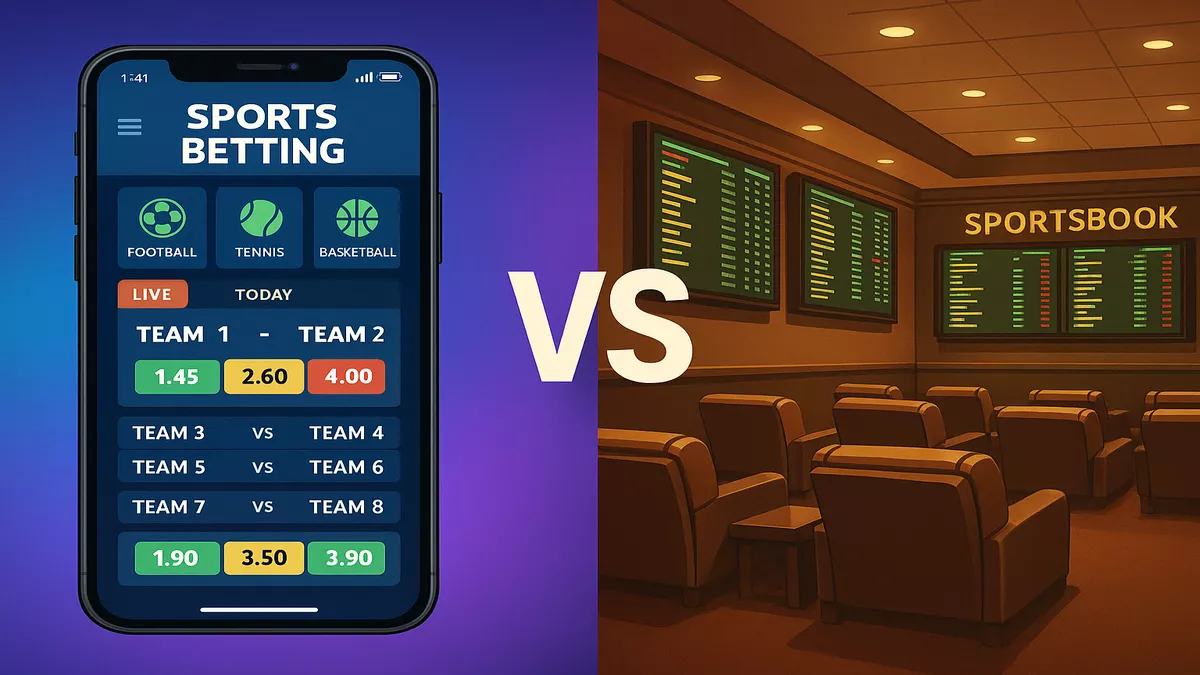
Online vs Offline Betting: Comparing the Modern Digital Experience with Traditional Sportsbooks
Remember when betting on sports meant either driving to a casino, finding a sketchy bookie who knew a guy, or booking a flight to Vegas? That world evaporated almost overnight. Between 2018 and 2023, the American sports betting landscape transformed from 80% retail to 80% online. That’s a complete reversal in five years, which makes it one of the fastest technology transitions in gambling history.
But here’s the thing nobody talks about—just because online betting won the war doesn’t mean offline betting is dead or that digital is automatically better for everyone. Both models have legitimate advantages and significant drawbacks. The “best” option depends entirely on what you value, how you bet, and what kind of experience you’re looking for.
Some people love the convenience of betting from their couch at 2 AM in their underwear. Others find something appealing about the ritual of walking into a physical sportsbook, filling out a ticket with a pen, and handing cash to a human being. Neither approach is wrong. They’re just different tools for different jobs.
This guide breaks down the real differences between online and offline bookmakers—not the marketing hype from either side, but the actual practical considerations that affect your betting experience and your wallet. We’ll cover everything from odds quality to social atmosphere, from payment processing to security concerns, and most importantly, help you figure out which model makes sense for your specific situation.
Use our criteria for choosing the best betting house to find your match.
The Digital Revolution: How We Got Here
The Professional and Amateur Sports Protection Act died in May 2018, and within weeks, New Jersey had legal online sportsbooks running. Other states followed so quickly it made regulatory heads spin. By the end of 2023, thirty-two states offered full online betting through mobile apps.
The speed of adoption shocked even industry insiders. DraftKings and FanDuel pivoted from daily fantasy sports to sportsbooks overnight. Casino giants like MGM and Caesars launched digital platforms to compete. Traditional European bookmakers like bet365 entered the American market. Within three years, a dozen major online sportsbooks were spending hundreds of millions on advertising, sponsoring every sports broadcast and podcast you could find.
Physical betting locations still exist, of course. Casino sportsbooks in Vegas and Atlantic City remain popular destinations. Some states only allow retail betting at tribal casinos or racetracks. But the trajectory is clear—mobile betting dominates and will continue to dominate. The question isn’t whether online betting will replace retail betting entirely, but rather what role physical locations will play in an increasingly digital ecosystem.
The economics drive this shift. Operating a betting app costs a fraction of running a retail location. No real estate. No cashiers. No printed betting slips. Lower overhead means better odds for customers, which means more betting volume, which means more profit despite smaller margins. It’s a flywheel effect that advantages digital operations.
But economics don’t tell the whole story. Human behavior and preferences matter. Some bettors will always prefer physical locations regardless of slightly worse odds. Understanding why requires looking at both models in detail.
Online Bookmakers: The New Standard

Online Betting: Convenience and Technology at Your Fingertips
Opening a betting app on your phone and placing a bet in ten seconds feels like magic compared to the old way. The convenience is undeniable and represents the primary reason online betting became so dominant so quickly.
You can bet anytime, anywhere within your state. Three in the morning? No problem. Christmas Day? Apps don’t close. Sitting in traffic? Pull out your phone at a red light and lock in that bet before kickoff. This accessibility fundamentally changed betting from a destination activity to something you can do spontaneously whenever inspiration strikes.
The variety of betting options online dwarfs what retail locations can offer. A major soccer match might have fifteen hundred different betting markets on an app—from standard moneylines to absurd props about throw-ins and corner kicks. A betting shop might offer twenty markets for that same game. They physically can’t display thousands of options on screens and boards, so they focus on popular markets. Online, space is infinite and everything is searchable.
Live streaming has become a standard feature at top online bookmakers and represents something physical locations can’t easily replicate. Bet365 streams over a hundred thousand events per year. You can watch a tennis match in Kazakhstan while betting on it from your living room. This integration of watching and betting creates an experience that’s genuinely better than watching on TV while placing bets separately.
The odds are legitimately better online, and this isn’t marketing spin—it’s basic economics. Physical betting shops carry overhead that digital operations avoid. Real estate costs. Staff salaries. Utilities. Maintenance. Security. All of that gets priced into the odds. A typical point spread at a retail window might be -115 on both sides. Online, you’ll commonly find -110 or even -108 at sharp books. That five to seven point difference in odds translates to real money over hundreds of bets.
Let’s do the math on that difference. Say you bet $110 to win $100 at a retail shop offering -110 odds. You need to win 52.38% of your bets to break even. Online at -105, you need to win 51.22%. That single percentage point of breathing room is worth thousands of dollars annually if you’re a regular bettor. Over a lifetime? The difference could be a new car or a down payment on a house.
Bonuses and promotions are almost exclusively an online phenomenon because the economics allow it. Welcome offers range from deposit matches to risk-free bets worth hundreds or thousands of dollars. Reload bonuses reward consistent depositing. Free bet clubs give you weekly credits. Odds boosts artificially improve prices on select markets. Loyalty programs provide points that convert to free bets. Retail shops offer essentially none of this because their margins are already razor-thin.
The catch with bonuses is that they’re never quite as good as they look. A thousand-dollar deposit match sounds amazing until you read the fine print requiring fifteen times rollover at minimum -200 odds with a thirty-day expiration. Most casual bettors never extract full value from their bonuses because they can’t meet the requirements or don’t read the terms. But even capturing partial value beats the zero bonus dollars available at retail shops.
Payment flexibility online gives you options that cash and card at a window can’t match. E-wallets like PayPal and Skrill process deposits instantly and withdrawals within a day. Cryptocurrencies offer privacy and speed that traditional banking can’t approach. Bank transfers work for large amounts where card limits might be restrictive. You can fund your account from your phone while sitting on the toilet if that’s your thing.
Advanced betting tools exist only in the digital realm. Bet builders let you combine multiple markets from one game into a custom parlay with calculated odds. Cash-out functions let you settle bets early to lock in profit or minimize losses. Statistics pages provide historical data, head-to-head records, and form guides. Some sportsbooks offer AI-powered betting suggestions, though whether trusting a robot with your money is wise remains debatable.
Responsible gambling features are more robust online because automation makes implementation easier. Set a deposit limit and the system enforces it—you literally can’t deposit more even if you want to. Time-outs lock your account for a specified period. Reality checks pop up showing how long you’ve been betting and how much you’ve won or lost. Self-exclusion programs ban you permanently with your information shared across multiple operators through state databases. Physical shops can’t enforce any of this because they can’t track you across visits or prevent you from betting with cash.
The Downsides of Digital Betting
Online betting isn’t all sunshine and deposit bonuses. The convenience that makes it attractive also makes it dangerous for people prone to impulsive behavior. Betting from bed at midnight after a few drinks leads to decisions you’d never make sober in daylight. The friction of getting dressed and driving to a physical location provides built-in cooling-off periods that digital betting eliminates.
Cybersecurity concerns are legitimate even if they’re overblown in popular discourse. Phishing attacks happen. Account hacking occurs. Data breaches are real. Reputable sportsbooks invest heavily in encryption and security, but you’re still trusting a digital platform with your financial information and funds. If someone gains access to your account, they can bet away your balance or change your withdrawal information to redirect funds before you notice.
The verification process frustrates new users even though it’s legally required. Creating an account takes five minutes. Getting that account verified to make your first withdrawal can take days and requires uploading government-issued ID, proof of address, and sometimes additional documentation. The first withdrawal always triggers extra scrutiny because that’s when money-laundering prevention kicks in. It’s annoying but unavoidable—licensed sportsbooks must comply with federal anti-money-laundering regulations and state gaming commission requirements.
Withdrawal processing times are the biggest practical complaint about online betting. Deposits are instant across all payment methods. Getting money out takes patience. E-wallets process fastest at twenty-four to forty-eight hours. Credit and debit cards take three to five business days. Bank transfers can take a week. The timing depends on the sportsbook’s payment processor, your bank’s policies, and how backed up their verification queue is. If you need your money immediately, this lag is frustrating.
The impersonality of digital betting bothers some people even if they can’t articulate exactly why. There’s no human interaction. No building relationships with counter staff who know your name. No fellow bettors to commiserate with when your bet loses on a last-second field goal. You’re alone with your phone, tapping buttons and watching numbers change. For social people, this isolation is a genuine negative that no amount of better odds can compensate for.
Technical problems happen more often than sportsbooks would like to admit. Apps crash during high-traffic events. Bets get rejected for no clear reason. Cash-out buttons freeze right when you need them. Live betting odds lag behind actual game action. Most issues resolve quickly, but when you’re trying to get a bet down before kickoff and the app won’t load, “usually reliable” doesn’t help much.
Account limitations and closures are real issues that sharper bettors face. Win too consistently, particularly on props or less liquid markets, and you might find your maximum bet sizes reduced to nickels and dimes. Some sportsbooks will outright close accounts of winning players, often with minimal explanation. They have the legal right to refuse service to anyone, and they exercise that right when someone costs them too much money. Retail shops are less likely to ban you unless you’re truly egregious, simply because tracking individual bettors across casino visits is harder.
Offline Bookmakers: The Traditional Experience
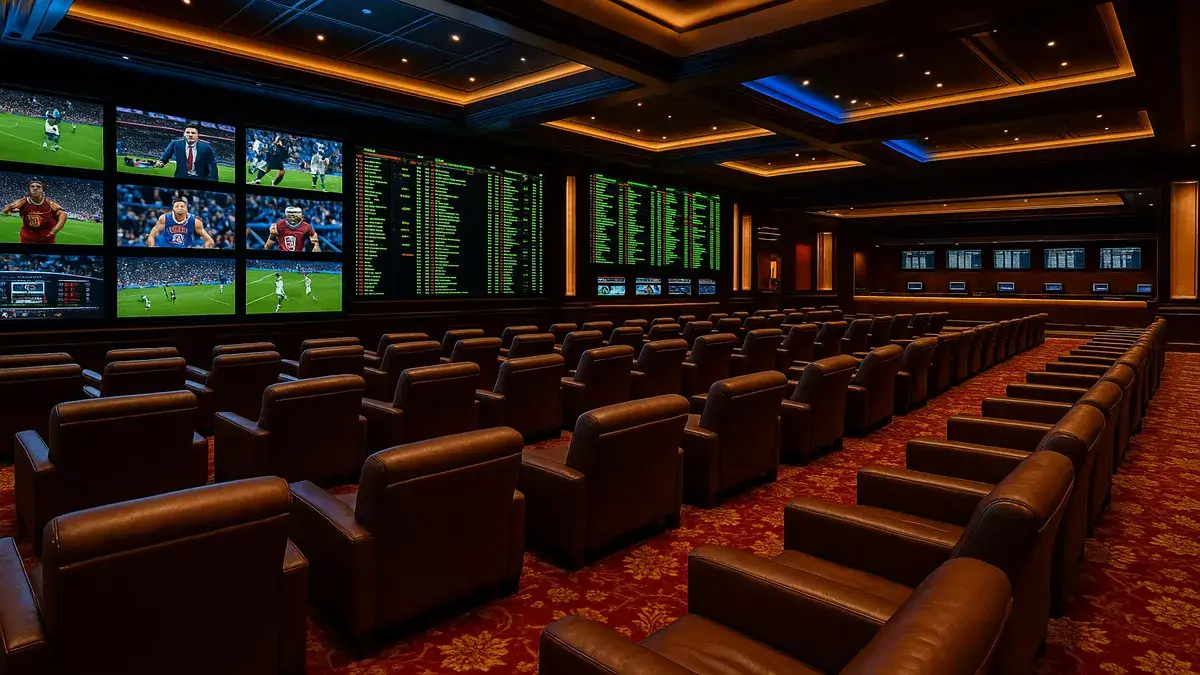
Traditional Sportsbook: The Social Atmosphere and Tangible Experience
Walking into a proper sportsbook in a major casino is an experience that mobile apps can’t replicate. Giant screens covering every wall showing dozens of games simultaneously. The buzz of hundreds of people cheering and groaning in unison. The physical betting boards with numbers that clack and flip when lines move. For people who love sports and the social atmosphere of watching games with strangers who share your passion, physical sportsbooks offer something genuinely special.
The tangible nature of offline betting appeals to people who grew up before smartphones became ubiquitous. Writing your bet selections on a physical slip with a pen, handing it to a person behind a counter, receiving a printed ticket that you keep in your pocket until the game concludes—there’s a ritualistic quality to this process that digital betting lacks. You’re physically participating rather than tapping pixels.
Instant cash payouts are the major practical advantage of betting shops. Win your bet, walk to the counter, hand over your ticket, receive cash immediately. No withdrawal processing times. No account verification. No waiting three business days for bank transfers. The money is in your hand within sixty seconds of the game ending. For people who prefer cash-based money management or distrust digital financial systems, this immediacy has real value.
The social atmosphere matters more than digital advocates acknowledge. Regular bettors at retail locations develop communities—they know each other, share tips, celebrate wins together, and commiserate over bad beats. There’s a guy who’s always at the Westgate SuperBook in Vegas betting baseball totals. Everyone knows him. He’s part of the furniture. That community simply doesn’t exist online beyond anonymous chat rooms and forums.
Face-to-face customer service means something to certain demographics, particularly older bettors who didn’t grow up resolving problems through email and chat. If you have a question or dispute, you’re talking to a human being who can see your ticket and pull up your account on their terminal. They might not be able to fix every problem, but at least you’re dealing with a person rather than waiting for email responses or getting bounced between chat support agents reading from scripts.
Privacy and anonymity are greater at physical shops for bettors who value those things. You’re betting with cash in many cases. No digital trail. No account in your name that hackers could compromise. No targeted advertising following you around the internet because algorithms know you bet sports. Some people genuinely prefer this analog approach to privacy even if it seems outdated to digital natives.
The perceived trustworthiness of physical establishments matters psychologically even if it’s not necessarily rational. A giant casino with a sportsbook that’s been operating for decades feels safer to some people than downloading an app from a company they’ve never heard of. You can see where your money is going. You can walk in and complain to a manager if something goes wrong. This tangibility provides psychological comfort that digital operations struggle to replicate.
The Reality of Retail Betting Limitations
Operating hours are the most obvious limitation of physical betting shops. They’re open during business hours, maybe until midnight if you’re lucky. Want to bet on a European soccer match that kicks off at 3 PM local time but 7 AM your time? Better set an alarm and get to the shop early. Online, you bet when you wake up at a reasonable hour.
Geographic restrictions mean you need to be physically present at the location to bet. That sounds obvious but creates real limitations. If you live an hour from the nearest legal betting location, placing a bet requires two hours of round-trip driving. Weather doesn’t care about your betting plans. Traffic happens. Your car breaks down. Physical presence requirements create friction that online betting eliminates entirely.
The betting selection at retail shops is a fraction of what’s available online simply because of display limitations. They can show maybe thirty to fifty markets on screens and boards before information density becomes overwhelming. The popular stuff is there—spreads, totals, moneylines, major props. Want to bet on the number of yellow cards in a Turkish soccer match? Probably not happening at a retail window unless you ask them to put it up special, which they might not even offer.
Odds quality is objectively worse at retail shops due to higher overhead costs. We already covered this, but it bears repeating because the difference compounds over time. That five to seven points of extra juice on every bet isn’t trivial. A bettor placing five bets per week for a year at retail odds is paying an extra $500 to $1,000 in aggregate vigorish compared to the same bets placed online. That’s real money.
No promotional offers means you’re betting at full price all the time. Online bettors get welcome bonuses, reload bonuses, odds boosts, free bet clubs, and loyalty rewards. Retail bettors get nothing. The cost of this foregone value is substantial—even casual bettors can extract several hundred dollars per year in promotional value from online books. Retail bettors leave that money on the table.
Limited payment methods means cash or card in most cases. No e-wallets. No cryptocurrency. No bank transfers. If you want to bet $5,000, you’re either carrying that much cash (risky) or running into daily card limits. Online, you can fund large accounts through bank transfers or crypto without the security concerns of carrying cash through a casino.
Technology limitations are obvious when you’re used to digital interfaces. Want detailed statistics on a player’s performance against left-handed pitchers in day games? Better have your phone handy because the betting window doesn’t provide that. Bet builders? Custom parlays with odds calculation? Cash-out functions? None of these exist in retail environments.
The Hybrid Approach: Best of Both Worlds?
Hybrid Betting: Combining Online Convenience with Offline Benefits
Major operators increasingly offer integrated experiences where retail and online work together. Caesars, BetMGM, DraftKings, and others let you maintain a single account that works both online and at their retail locations. You can deposit cash at a casino cage and bet online. Or bet online and cash winning tickets at retail windows for immediate payment.
This hybrid model provides strategic advantages if you know how to use it. Deposit cash at retail to avoid the digital paper trail. Bet online for better odds and more markets. Cash out at retail for immediate payment without withdrawal processing times. Use welcome bonuses online while maintaining the option to visit physical locations when you’re at the casino anyway.
The regulatory landscape enables this integration in states where the same operator has both retail and online licenses. Nevada has had this forever—you can bet online through Caesars, DraftKings, or BetMGM and settle at their Vegas properties. New Jersey, Pennsylvania, and other major betting states have adopted similar models.
Some bettors use the hybrid approach strategically for bankroll management. Keep your main bankroll online where it’s easily accessible and earns loyalty points. Deposit and withdraw cash at retail when you want physical currency for non-betting expenses. This separation between digital and physical money helps some people manage their finances better than keeping everything in one place.
The social angle works differently in hybrid models. You can watch games at physical sportsbooks with the community atmosphere while betting through the app on your phone, getting better odds than the retail boards show. You’re physically present for the social experience but digitally betting for the economic advantage. It’s genuinely the best of both worlds if you’re in a location where this is possible.
Security Considerations: Different Risks, Different Solutions

Betting Security: Protecting Your Money and Personal Information
Online betting security concerns mostly revolve around digital threats—hacking, phishing, data breaches, identity theft. Reputable sportsbooks use 256-bit SSL encryption, two-factor authentication, and fraud detection systems. Your bigger vulnerability is typically poor personal security hygiene—weak passwords, clicking phishing links, using public WiFi for financial transactions.
Protect yourself online by using strong unique passwords for each betting account, enabling two-factor authentication everywhere it’s available, never clicking links in unsolicited emails claiming to be from sportsbooks, and avoiding betting on public WiFi networks. These basic practices eliminate 95% of security risks. The remaining 5% is mostly platform-level breaches that you can’t control but rarely result in customer losses because legitimate operators carry insurance and make customers whole.
Offline betting security is more physical—carrying cash, safety in parking lots, keeping track of paper tickets that are essentially bearer instruments worth whatever they say. Lose a winning ticket and that money is gone. Get robbed in the parking lot carrying your winnings and you’re out both the money and your physical safety. These risks feel more tangible than digital threats even if they’re statistically less likely.
Protecting yourself offline means basic physical security. Don’t flash cash. Be aware of your surroundings. Keep winning tickets safe—some people photograph them immediately as backup documentation. Use casino safe deposit boxes for large amounts rather than carrying them. These precautions seem obvious but people get careless when they’re excited about a big win.
The trust equation differs between online and offline. Online, you’re trusting the sportsbook’s technical security and their financial solvency. Offline, you’re trusting that the physical establishment will pay winners and that you won’t get robbed. Both require trust, just in different ways. Licensed operators in both categories are generally trustworthy because their licenses are worth far more than any individual bet they could steal. The enforcement mechanisms differ, but the economic incentives to operate honestly are similar.
Making Your Choice: What Actually Matters

Making Your Choice: Key Factors for Selecting Your Betting Method
Your betting frequency largely determines which model makes sense. If you bet occasionally—once a month on big games—the convenience of online isn’t as valuable. Driving to a casino sportsbook a few times per year to place your bets is perfectly reasonable. You might enjoy the experience as an outing. The slightly worse odds cost you maybe twenty bucks per year, which is negligible.
If you bet multiple times per week, online becomes almost mandatory. The cumulative advantage of better odds and bonus offers adds up quickly. The convenience of betting from anywhere becomes essential when you’re analyzing daily betting markets and need to act on opportunities as they emerge. Regular bettors save hundreds or thousands annually by betting online instead of retail.
Your stake levels matter. Betting $20 per game means the difference between -110 and -115 odds costs you about fifty cents per bet. Annoying but not life-changing. Betting $2,000 per game means that same difference costs you $50 per bet. Do that twice a week and you’re paying an extra $5,000 per year in vigorish at retail shops. At those stakes, betting retail is essentially burning money.
Your age and technology comfort are honest considerations even though nobody wants to admit it matters. If you’re 70 years old and smartphones confuse you, betting online might be more trouble than it’s worth. Stick with retail where you understand the process and feel comfortable. If you’re 30 and your phone is an extension of your hand, betting retail is probably just inconvenient nostalgia.
Your social preferences are completely valid even if they’re not economically optimal. Some people genuinely enjoy the physical sportsbook experience and are willing to pay slightly worse odds for that atmosphere. That’s fine. Entertainment has value. If watching games in a crowded sportsbook brings you joy that watching alone at home doesn’t, the worse odds are essentially your admission fee. Just acknowledge that’s what you’re doing rather than convincing yourself retail offers equal value.
Your location determines what’s even possible. If you live in New Jersey with multiple online options, choosing retail over online is a active choice you’re making. If you live in a state where betting is only legal at tribal casinos fifty miles away, the choice is effectively made for you—online when it’s available, retail when you’re at the casino.
The Future: Where This All Goes
Online betting will continue to dominate and probably expand its market share even further. The economic advantages are too substantial for retail betting to stage a meaningful comeback. Younger bettors who are digital natives will default to online betting without even considering retail alternatives.
But physical sportsbooks won’t disappear entirely. They serve different purposes. Vegas sportsbooks are tourist destinations and entertainment venues, not just places to bet. High-end casino sportsbooks offer luxury experiences that apps can’t replicate. Tribal casino sportsbooks in states without online betting provide the only legal option for millions of people.
The hybrid model will become standard for operators large enough to maintain both retail and online presence. This makes sense for everyone—customers get flexibility, operators get multiple revenue streams, and states get tax revenue from both channels. The siloed “retail OR online” approach is giving way to integrated “retail AND online” systems.
Technology will narrow some gaps. Retail locations are adding more advanced betting terminals that replicate some online functionality. Bet builders, cash-out features, and detailed statistics are coming to retail environments through self-service kiosks that function like betting app interfaces. This won’t eliminate online advantages but will reduce them slightly.
Regulatory changes might shift the landscape in ways nobody predicts. If federal legislation standardizes betting laws across states, that could enable more sophisticated interstate platforms. If problem gambling concerns lead to tighter restrictions, those might affect online betting disproportionately because of its accessibility. The rules aren’t static.
Final Verdict: Online vs Offline Bookmakers
Online betting won the war because it offers better odds, better selection, better convenience, and better bonuses. For the vast majority of bettors, particularly regular bettors placing multiple wagers per week, online is clearly superior from a pure value perspective.
But retail betting serves legitimate purposes and offers genuine advantages for specific situations and preferences. Immediate cash payouts, social atmosphere, and the tangible experience of physical betting have value that can’t be reduced to odds calculations.
The smart play for most people is maintaining flexibility. Have online accounts for regular betting where you benefit from better prices and promotional offers. Visit retail locations occasionally for the experience or when you’re at a casino anyway. Use the hybrid approach strategically to optimize your betting economics while still enjoying physical sportsbook atmospheres when you want them.
What matters is understanding the tradeoffs you’re making. If you choose retail betting despite worse odds because you enjoy the experience, great—that’s an informed decision. If you choose online despite security concerns because you want maximum value, also great. What’s not great is betting retail without realizing you’re paying a premium for the privilege, or betting online without understanding the security implications.
The betting landscape has changed radically over five years and will continue evolving. Stay informed about your options, understand what you’re getting from each model, and choose the approach that matches your priorities. There’s no universally correct answer—just the right answer for your specific situation.
Get the best wagering advice on our expert platform.
