
 Available in US
Sports Betting Laws 2026: State Guide
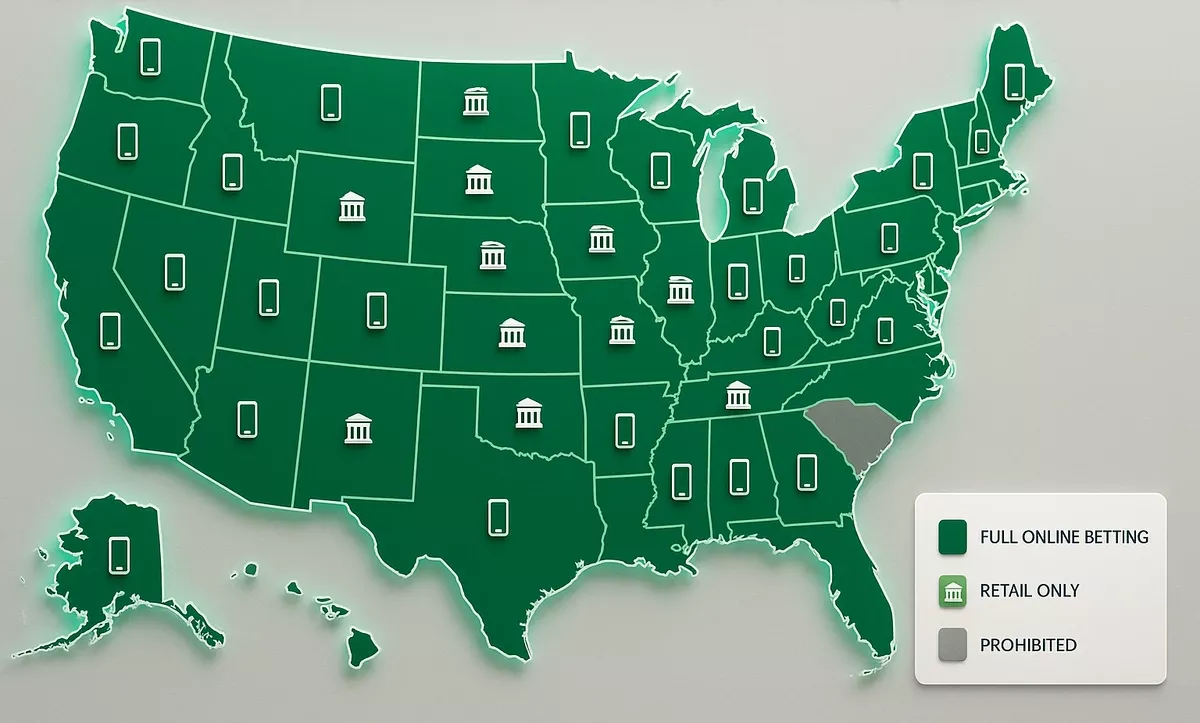
Legal sports betting in America exists in a weird space between wild west chaos and overregulated bureaucracy, depending entirely on which state you’re standing in. Cross the border from New York to Connecticut and the tax rates change by 40 percentage points. Drive from Nevada to Utah and you go from betting paradise to complete prohibition in twenty minutes. It’s a mess, honestly, but it’s the mess we’ve got.
The Supreme Court’s 2018 decision to kill PASPA didn’t create a unified national sports betting framework it just kicked the decision to fifty different state legislatures, each with their own priorities, politics, and peculiar ideas about how gambling should work. Some states embraced betting enthusiastically, launching online sportsbooks within months. Others are still arguing about it seven years later, with bills dying in committee every legislative session while residents drive to neighboring states or bet with offshore books.
Understanding the legal landscape matters for practical reasons beyond just “following the law.” Where you bet determines what consumer protections you have, which operators are available, what tax obligations you face, and whether you have any recourse if something goes wrong. The difference between betting with a licensed, regulated sportsbook versus an unregulated offshore operation is the difference between protected consumer status and “good luck, you’re on your own.”
This guide breaks down the current legal status of sports betting across America, explains how regulation actually works, compares domestic and offshore operators, and helps you navigate the complex patchwork of laws that govern where and how you can legally bet on sports in 2026. We’ll also look at what’s coming next, because this landscape keeps shifting faster than most legal frameworks can handle.
Cross-reference these rules with our legal notice page.
The Legal Foundation: How We Got Here
For twenty-six years, the Professional and Amateur Sports Protection Act made sports betting illegal almost everywhere in America. PASPA passed in 1992 with bipartisan support, driven by concerns about gambling’s impact on sports integrity and squeamish feelings about betting in general. The law grandfathered in Nevada’s existing sports betting, plus limited programs in Delaware, Montana, and Oregon, but banned everyone else from legalizing it.
PASPA’s logic was paternalistic and arguably unconstitutional from the start the federal government was telling states what laws they couldn’t pass, which runs headlong into the Tenth Amendment’s reserved powers clause. But nobody challenged it seriously until New Jersey got fed up watching billions in potential tax revenue go to Nevada or illegal bookmakers.
New Jersey’s crusade against PASPA started in 2011 and took seven years of legal battles. The state argued that PASPA violated state sovereignty by commandeering state legislatures forcing them not to regulate something rather than setting federal standards. The sports leagues opposed New Jersey viciously, filing lawsuit after lawsuit to preserve the status quo. The irony of leagues fighting to keep betting illegal while simultaneously partnering with casinos and taking gambling advertising money wasn’t lost on anyone paying attention.
The Supreme Court’s decision in Murphy v. NCAA came down on May 14, 2018, with a 6-3 ruling striking down PASPA entirely. Justice Alito wrote that Congress can regulate sports gambling directly, but it can’t tell states they’re forbidden from regulating it themselves. That distinction might seem technical, but it fundamentally changed American gambling law overnight.
New Jersey launched legal sports betting within weeks of the decision. Delaware, already running a limited lottery-based system, expanded operations immediately. Pennsylvania, which had passed enabling legislation in anticipation of winning the lawsuit, turned on its first sportsbooks by summer. The dam had broken, and the flood was just beginning.
The interesting legal question that PASPA’s death created was whether existing federal gambling laws like the Wire Act still applied to sports betting. The Wire Act of 1961 was written to combat organized crime’s use of wire communications for gambling, and it specifically mentions sports betting. The Department of Justice has flip-flopped on whether the Wire Act applies only to sports betting or to all forms of online gambling, issuing conflicting opinions in 2011 and 2018. As of 2026, the legal consensus is that the Wire Act doesn’t prevent intrastate sports betting but might prevent interstate betting operations, though nobody has really tested this in court seriously.
The Current Patchwork: State by State Status
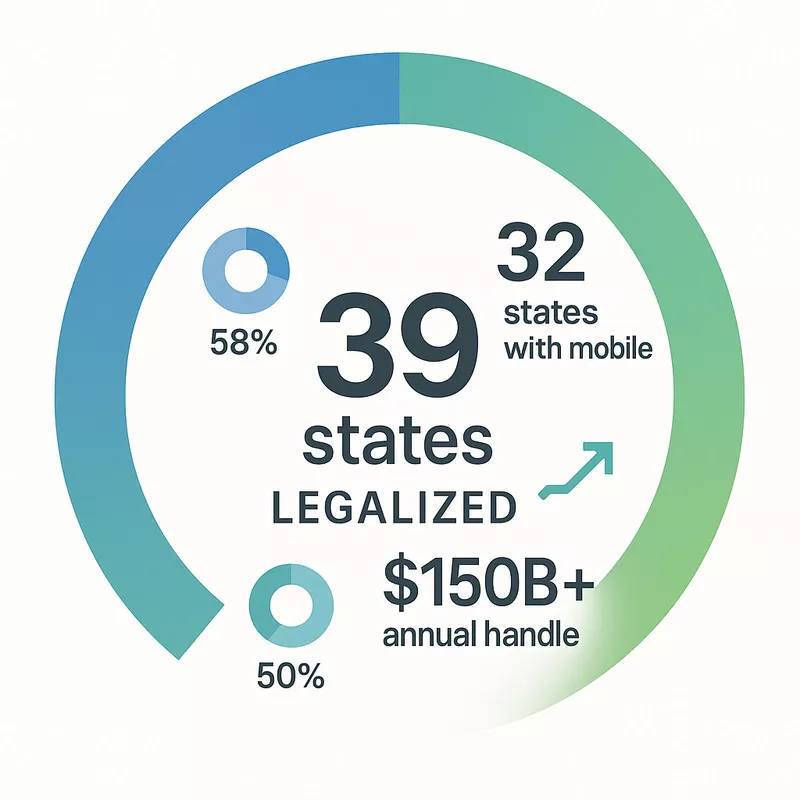
Thirty-nine states plus DC and Puerto Rico have legalized sports betting in some form as of early 2026. That’s three-quarters of the country by geography, though population coverage is higher because many of the holdout states are small or rural. Thirty-two states offer full online sports betting through mobile apps, meaning you can bet from your couch if you’re physically present in the state.
The Online Betting States
Arizona, Arkansas, Colorado, Connecticut, Delaware, Illinois, Indiana, Iowa, Kansas, Kentucky, Louisiana, Maine, Maryland, Massachusetts, Michigan, Nevada, New Hampshire, New Jersey, New Mexico, New York, North Carolina, Ohio, Oregon, Pennsylvania, Rhode Island, Tennessee, Vermont, Virginia, Washington DC, West Virginia, Wisconsin, and Wyoming all offer some form of mobile sports betting. That list keeps growing Missouri approved sports betting in November 2024 and expects to launch online betting by summer 2026.
Each state’s market looks different. New Jersey has multiple operators and fierce competition, leading to great odds and aggressive promotions. New York has high operator taxes (51% of gross gaming revenue), which gets passed to bettors through worse odds and stingier bonuses. Nevada has had sports betting forever, so the market is mature and sophisticated. Tennessee has online-only betting with no retail component, which was a novel approach when it launched.
The operational details vary wildly. Some states require in-person registration, meaning you must physically visit a casino to activate your online account. Most allow remote registration where you sign up entirely through the app. Some states allow betting on college sports, others prohibit it entirely or limit it to games not involving in-state schools. Some allow prop betting on college athletes, others ban it. There’s no consistency.
The Retail-Only States
Mississippi, Montana, and a few others allow sports betting but restrict it to physical locations or have weird implementation. Mississippi technically allows mobile betting, but only when you’re physically on casino property, which defeats most of the purpose of mobile betting. Montana runs betting through lottery terminals scattered across bars and convenience stores you can use an app, but only while physically at an authorized location.
These hybrid approaches generally represent political compromises or legacy systems that predate full mobile betting. They’re functional but clunky, and most of these states will probably evolve toward full mobile access eventually because the tax revenue difference is too substantial to ignore indefinitely.
Tribal Gaming States
Wisconsin, Washington, and some other states limit sports betting to tribal lands under gaming compacts negotiated between tribes and state governments. The Indian Gaming Regulatory Act gives tribes significant autonomy over gambling on tribal lands, and some tribes have launched sophisticated sportsbook operations as a result.
These operations vary from tribe to tribe and state to state. Some offer mobile betting through geofenced apps that work only on tribal property. Others operate retail-only sportsbooks at their casinos. The legal framework is more complex because it involves federal law (IGRA), state law, and tribal sovereignty, creating a three-way negotiation that’s often contentious.
Florida has perhaps the most unusual setup the Seminole Tribe operates the exclusive Hard Rock Bet platform under a compact with the state that faced multiple legal challenges before finally launching. The exclusivity is controversial, but it’s what the tribe negotiated as their price for offering sports betting.
The Holdout States
Utah and Hawaii have constitutional prohibitions against gambling and aren’t legalizing sports betting anytime soon. Utah’s Mormon-majority population views gambling as immoral, and the state constitution reflects that. Hawaii’s prohibition comes from different cultural values but is equally entrenched. Neither state shows any political movement toward legalization.
California’s situation is more complicated and more frustrating for betting advocates. The nation’s largest state by population could have the biggest sports betting market in America, but tribal gaming interests and commercial gambling companies can’t agree on terms. Multiple ballot initiatives have failed after tens of millions spent on advertising from both sides. Tribes want exclusive mobile betting rights. Commercial operators want to participate. Neither side will compromise, so California remains betting-illegal despite clear public interest in legalization.
Texas, Georgia, and several other large states have active lobbying and legislative efforts but haven’t gotten sports betting across the finish line yet. Georgia has come close multiple times, with bills passing one chamber but not the other. Texas faces opposition from religious conservatives and hasn’t seriously advanced any betting legislation despite massive potential tax revenue. These states will probably legalize eventually, but “eventually” could mean next year or could mean another decade.
How Regulation Actually Works
Every state that legalizes sports betting designates a regulatory body to oversee the industry. Usually it’s the state gaming commission, but sometimes it’s the lottery board, the alcoholic beverage commission (seriously, in some states), or even the horse racing commission. These bodies write the specific operating rules, issue licenses, collect fees and taxes, handle consumer complaints, and enforce compliance.
The Licensing Process
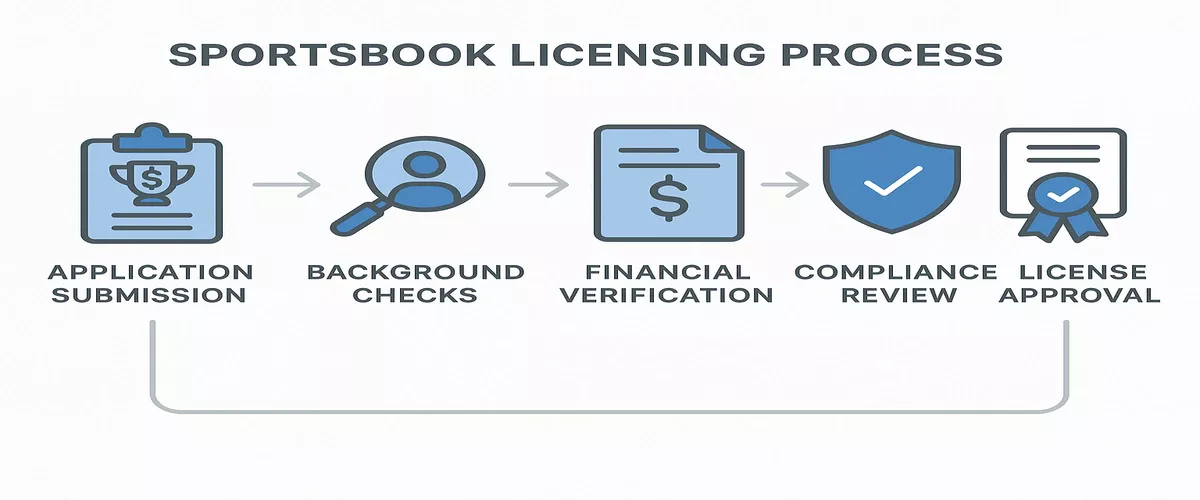
Getting a sports betting license isn’t cheap or easy. Application fees run from hundreds of thousands to millions of dollars depending on the state. The application itself requires extensive disclosure of ownership structure, financial backing, criminal background checks for all major stakeholders, details of technology platforms, and comprehensive compliance plans.
Background checks are thorough. If you’ve ever been convicted of gambling-related crimes, organized crime connections, or financial fraud, you’re not getting a license. Even minor criminal history can cause problems if it suggests integrity issues. The regulatory bodies take this seriously because the integrity of sports betting depends on keeping out bad actors.
Financial requirements are substantial. Operators must prove they have enough cash reserves to pay out even unlikely scenarios like if every bet on a slate of games wins simultaneously. This typically means maintaining millions in liquid reserves, which only serious operators can afford. The point is ensuring that when you win a bet, the money is actually there to pay you.
Ongoing compliance includes regular audits, reporting requirements, and fees that add up quickly. Operators must submit monthly reports on betting handle, revenue, taxes owed, and problem gambling metrics. They must maintain certain responsible gambling features. They must update the commission on any major changes to ownership, operations, or technology. It’s bureaucratically intensive, which is intentional the barrier to entry keeps out marginal operators who can’t afford proper compliance.
Consumer Protections
Licensed operators must segregate customer funds from operational money. This means your account balance sits in a separate account that’s protected even if the company goes bankrupt. Offshore operators don’t do this, which is why your money is at risk if they fold.
Dispute resolution processes exist through the regulatory commissions. If you have a problem with a licensed sportsbook they won’t pay out a winning bet, they closed your account without explanation, they applied bonus terms incorrectly you can file a formal complaint with the state gaming commission. They have investigative authority and can levy fines, suspend licenses, or force operators to make you whole.
These protections have real teeth. In New Jersey, the Division of Gaming Enforcement doesn’t mess around. Operators who screw over customers face serious consequences because their license is worth way more than any individual customer dispute. This creates strong incentives to treat customers fairly even when they’d rather not pay out a large winning bet.
Tax and Revenue Structure
Tax rates on sports betting vary absurdly across states. Nevada charges 6.75% of gross gaming revenue. New York charges 51%. That difference isn’t a typo New York takes over half of what sportsbooks make. Pennsylvania sits around 36%. Illinois is 15%. There’s no logic or consistency to these rates beyond “what could we convince our legislature to pass.”
Higher tax rates create worse odds for bettors because operators pass through those costs. New York sportsbooks offer consistently worse odds than New Jersey books across the river because New York’s tax burden is so much higher. The promotions are less generous, the margins are wider, and the overall value is worse. Bettors effectively pay the tax through reduced expected value.
Some states allow operators to deduct promotional costs before calculating taxable revenue. Others don’t. Some let operators carry forward losses from one month to offset revenue in future months. Others calculate taxes monthly with no carry-forward. These technical details affect operator profitability substantially and influence which states are attractive markets for sportsbooks.
Revenue sharing with sports venues, leagues, or teams happens in some states. Tennessee gives a portion of betting tax revenue to the Titans. Some states direct funds to problem gambling programs, public education, or general funds. The distribution varies by state political priorities.
Offshore vs Domestic: Understanding the Difference
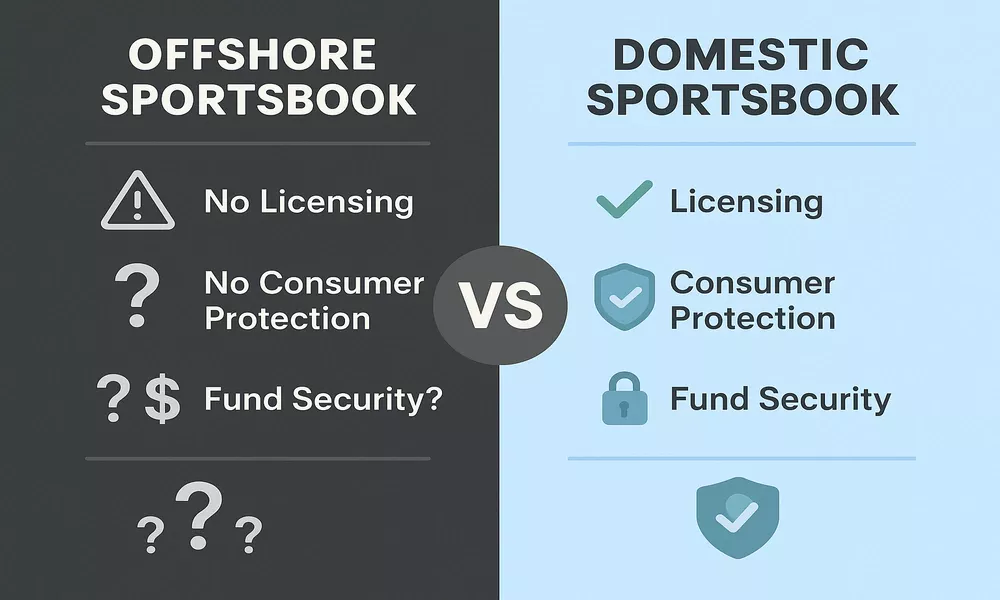
Offshore sportsbooks operate from foreign jurisdictions typically Caribbean nations like Costa Rica or Curaçao, or European countries like Malta or Gibraltar. They’ve served American customers for decades, even during the PASPA era when domestic sports betting was mostly illegal.
The Legal Gray Area
Here’s the technical legal status: it’s not illegal for you as an individual to place bets with an offshore sportsbook. Federal law targets the operators, not the customers. The Unlawful Internet Gambling Enforcement Act of 2006 doesn’t prohibit online gambling it prohibits financial institutions from processing payments related to illegal gambling. The Wire Act might apply but is ambiguous.
The practical reality is that you won’t get arrested for betting with Bovada or BetOnline. The Department of Justice doesn’t prosecute individual sports bettors. They go after the operators themselves, and offshore operators simply operate outside US jurisdiction where American law can’t reach them effectively.
But just because something is technically legal doesn’t mean it’s smart or safe. Betting with offshore books carries substantial risks that betting with licensed domestic operators doesn’t.
Why Offshore Books Still Exist
Offshore operators have served the American market for over twenty years and built substantial operations. They had the market to themselves during the PASPA era, and they’re not giving it up easily just because domestic options now exist.
They offer some advantages that appeal to certain bettors. Higher betting limits for sharp bettors who get limited at domestic books. More exotic markets and bet types. Fewer restrictions on winning players. Cryptocurrency payment options that are more private than traditional banking. Lower juice on some markets because they don’t pay American taxes.
Some offshore books are legitimately reputable operations that have paid customers reliably for decades. Bovada, BetOnline, Heritage, and a handful of others have track records suggesting they’re reasonably trustworthy even though they’re unregulated. But “reasonably trustworthy” isn’t the same as “legally protected,” and that difference matters when something goes wrong.
The Risks of Offshore Betting
If an offshore book refuses to pay your winnings, you have essentially zero recourse. No regulatory body will help you. American courts won’t hear your case because you’re dealing with an entity in another country that doesn’t answer to US law. You can complain on forums and try to hurt their reputation, but that’s about it.
Offshore books can close your account at any time for any reason with no explanation required. Domestic books can too, technically, but at least you can file a complaint with the state gaming commission that might force an explanation. Offshore, you’re just done.
Fund security is questionable. Offshore operators don’t segregate customer funds legally because no law requires it. Your account balance might be in a general operating account that’s vulnerable if the company faces financial problems. If they get shut down or raided, your money could vanish.
Payment processing is a constant challenge for offshore books because US banks won’t knowingly process gambling transactions with unlicensed operators. This forces offshore books to use workarounds cryptocurrency, person-to-person transfers, credit cards that code transactions as something other than gambling. These workarounds create risk for you because the payment chains are often sketchy.
Tax reporting is on you entirely. Licensed domestic sportsbooks issue W-2G forms for large wins and report them to the IRS. Offshore books don’t report anything, which means you’re responsible for tracking and reporting all gambling income yourself. Failure to report gambling income is tax evasion, which is a federal crime. The IRS absolutely can and does prosecute people for unreported gambling winnings.
Why Domestic Books Are Worth Using
Licensed domestic sportsbooks cost you slightly more in terms of odds and juice, but you’re buying real protections and recourse. Your funds are protected. Disputes have resolution mechanisms. The operators face serious consequences if they screw you over. That peace of mind is worth accepting slightly worse odds.
The convenience of domestic books is genuinely better for most people. Payment processing works smoothly through normal banking channels. Customer service is accessible and accountable. The apps are sophisticated and reliable. You don’t feel like you’re doing something vaguely sketchy when you tell people where you bet.
For regular bettors betting reasonable amounts, domestic books are clearly the right choice. The only scenarios where offshore might make sense are sharp bettors who get limited everywhere domestically and need higher limits, or people betting from states where betting remains illegal and they don’t want to wait for legalization or drive to a legal state.
International Perspectives: What Other Countries Do
The United Kingdom has the most mature regulated online gambling market in the world. The UK Gambling Commission has overseen online betting since 2005, creating a framework that balances consumer protection with operator profitability and government tax revenue.
UK regulation is comprehensive but increasingly restrictive. Maximum stake limits on certain bet types. Mandatory affordability checks for high-volume bettors. Strict advertising standards that prohibit targeting vulnerable populations. Self-exclusion programs that work across all operators. These protections arguably prevent problem gambling, though some bettors find them patronizing and intrusive.
The UK model influences American regulators because it’s the only large English-speaking market with two decades of online betting history to learn from. The problems UK regulators have dealt with problem gambling prevalence, advertising saturation, underage betting are problems American regulators want to avoid.
European Union markets are fragmented with each country setting its own rules. Germany has tight restrictions. France allows betting but heavily taxes and regulates it. Spain and Italy have developed mature markets. Malta and Gibraltar serve as licensing jurisdictions for operators serving multiple European markets.
Australia has a massive betting culture and a long history of legal sports betting. The Interactive Gambling Act regulates online gambling, with frequent amendments trying to balance consumer protection with industry interests. Australian regulators have been aggressive about protecting consumers, sometimes banning entire bet types they view as too risky or exploitative.
Canada legalized single-event sports betting in 2021, ending decades of only allowing parlay betting through provincial lotteries. Each province regulates independently, creating a patchwork somewhat like the American system but with more coordination. Ontario has the largest market and has attracted major international operators.
Responsible Gambling: Mandated Protections
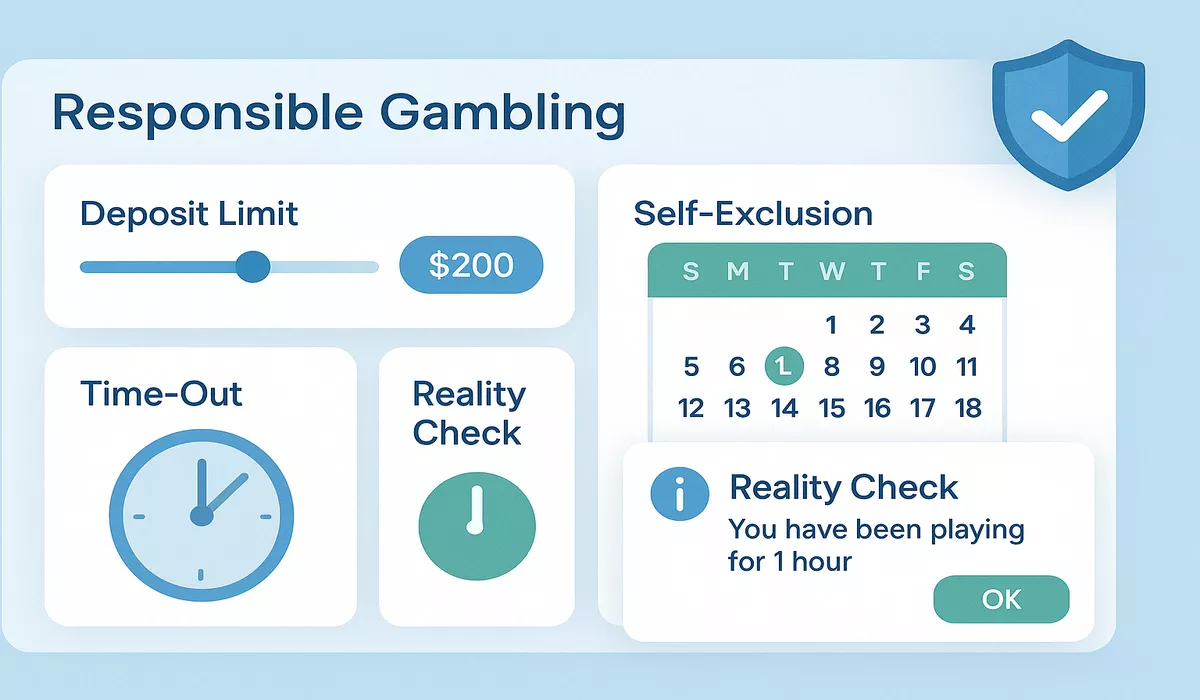
Every state that legalizes sports betting requires operators to implement responsible gambling tools. These aren’t optional features they’re license requirements. Operators who don’t maintain adequate responsible gambling programs face fines or license suspension.
Deposit Limits
You can set limits on how much you deposit per day, week, or month. Once you hit that limit, the system physically prevents you from depositing more until the period resets. You can reduce limits immediately, but increasing them typically requires a cooling-off period of 24-72 hours to prevent impulsive decisions.
The point is preventing you from chasing losses by depositing more money when you’re emotional. If you set a $500 weekly deposit limit and lose it by Wednesday, you’re done betting until the next week. That forced break provides cooling-off time that might prevent larger losses.
Time-Outs and Self-Exclusion
Time-outs let you temporarily disable your account for periods ranging from 24 hours to 6 months. During a time-out, you can’t log in, place bets, or deposit funds. The account automatically reactivates after the specified period ends.
Self-exclusion is permanent or semi-permanent account closure. Once you self-exclude, you can’t undo it for a minimum period (usually 6-12 months), and in some cases it’s permanent. Your information gets shared through state databases, preventing you from simply opening a new account with a different operator.
These tools work if people actually use them, which is the challenge. Problem gamblers are notoriously bad at self-imposing limits because impaired impulse control is part of the pathology. But having the tools available helps people who recognize they have a problem and want to protect themselves from their own worst impulses.
Reality Checks and Session Limits
Many states mandate periodic pop-ups during betting sessions showing how long you’ve been betting and how much you’ve won or lost. These “reality checks” interrupt the flow and force momentary awareness, which can break the trance-like state some problem gamblers enter.
Session limits let you set maximum betting durations. After you’ve been actively betting for the specified time, the system logs you out and requires a cooling-off period before you can log back in. This prevents marathon betting sessions where people lose track of time and money.
Access to Problem Gambling Resources
Licensed sportsbooks must provide easy access to problem gambling support resources. Links to the National Council on Problem Gambling, state-funded treatment programs, and crisis hotlines are mandatory in apps and websites. Some states require proactive outreach to high-volume bettors offering support resources.
The effectiveness of these interventions is debatable. People deep in problem gambling often ignore help resources until they hit rock bottom. But having resources available consistently and prominently means help is there when people are ready for it.
Tax Implications: What Bettors Need to Know
Gambling winnings are taxable income federally and in most states. This surprises casual bettors who win a big bet and assume they keep it all. You don’t. Uncle Sam wants his cut, and so does your state revenue department in most cases.
Reporting Requirements
Sportsbooks issue Form W-2G for any wager where the winning amount is $600 or more and at least 300 times the bet amount. So a $10 bet at +3000 odds winning $3,000 triggers W-2G reporting. These forms get sent to both you and the IRS, so the agency knows about the income.
Even winnings that don’t trigger automatic reporting are still taxable. You’re legally required to track and report all gambling income on your tax return, regardless of whether you received a W-2G. Most casual bettors ignore this requirement and probably get away with it because the IRS doesn’t have bandwidth to audit everyone’s gambling activity. But it’s still tax evasion, and the consequences if you get caught are serious.
Offsetting Losses
You can deduct gambling losses up to the amount of your gambling winnings, but only if you itemize deductions. This means most taxpayers using standard deductions can’t deduct losses at all they pay tax on winnings but get no deduction for losses.
Even if you itemize, you need documentation. The IRS expects betting records showing dates, bet amounts, outcomes, and net results. Screenshots of your betting app history usually suffice, but you need something. Claiming $10,000 in losses with no documentation will get rejected if audited.
The tax treatment of sports betting is genuinely unfavorable compared to other investment activities. Stock trading lets you offset gains with losses on your regular tax return without itemizing. Sports betting doesn’t. It’s one of many ways gambling gets treated worse than other risky activities in tax code.
State Tax Complications
State tax treatment varies wildly. Some states don’t tax gambling winnings at all. Others tax it as regular income. Some give credit for taxes paid to other states. Others don’t. If you live in one state but bet in another, you might owe taxes to both and need to figure out the credits yourself.
Professional gamblers can sometimes claim gambling as a business and deduct expenses beyond just losses travel to betting locations, subscriptions to data services, computers used for betting analysis. But qualifying as a professional gambler for tax purposes is difficult and invites IRS scrutiny. Most bettors are better off accepting recreational gambler status even if it means worse tax treatment.
What’s Coming Next
More states will legalize. Missouri launches in 2026. California will eventually get its act together, though probably not soon. Texas has too much potential tax revenue to ignore forever. Georgia keeps getting close. Within ten years, most of the country will probably have legal sports betting except the handful of states with constitutional prohibitions or overwhelming political opposition.
Federal standardization remains possible but unlikely. Multiple bills have been introduced in Congress proposing national sports betting standards minimum age requirements, responsible gambling mandates, data rights frameworks. None have passed because sports betting regulation is state-level by SCOTUS decision, and states resist federal intrusion. But if problem gambling becomes a major public health concern, federal intervention could happen.
Tax rates might rationalize as states compete for betting handle. New York’s 51% rate drives bettors to use New Jersey books if they’re near the border. States might realize that lower tax rates generating higher betting volume could produce more total revenue than confiscatory rates that push bettors elsewhere. Or they might not government tax policy isn’t always economically rational.
Technology will influence regulation as always. Blockchain betting, AI-powered problem gambling detection, biometric identity verification, and other innovations will create regulatory challenges. Regulators are always playing catch-up with technology, and gambling is no exception.
The biggest wildcard is whether public opinion shifts on sports betting. Right now, most Americans support legalization and view betting as harmless entertainment. If problem gambling rates spike dramatically, or if betting-related scandals damage sports integrity, sentiment could shift. The UK has seen backlash against gambling advertising and aggressive marketing, leading to tighter restrictions. America might follow that path.
Navigating the Legal Landscape
The practical advice for bettors is straightforward: bet only with licensed, regulated operators in jurisdictions where you’re legally allowed to bet. This protects you legally and gives you recourse if something goes wrong.
Verify licensing by checking state gaming commission websites. Every legitimate operator lists their license number on their site, usually in the footer. If you can’t find a license number or it doesn’t verify, walk away. That operator is either offshore or outright fraudulent.
Understand your state’s specific rules. Some states prohibit college betting. Others allow it with restrictions. Some require in-person registration. Others don’t. Know what’s legal where you are before betting.
Keep records for tax purposes even if you’re not worried about getting caught. It’s the right thing to do legally, and having documentation protects you if questions arise. Betting apps make this easy most let you export betting history as CSV files that you can give to your accountant.
Use responsible gambling tools proactively if you have any concern about your betting behavior. Setting deposit limits doesn’t mean you have a problem it means you’re being smart about managing risk. If betting stops being fun, the tools exist to help you take a break.
The legal landscape of sports betting in America is messy and inconsistent, but it’s functional if you know the rules. The protections that come with legal, regulated betting are worth accepting slightly worse odds compared to offshore alternatives. Your money is safer, your rights are clearer, and you’re not operating in legal gray areas that could cause problems down the line.
Understanding the law doesn’t make you a lawyer, but it makes you an informed bettor. And in a landscape as complex as American sports betting regulation, being informed is half the battle.
Stay updated with the industry on our front page.
