
 Available in US
How to Choose the Best Bookmaker: 2026 Guide

Picking a sportsbook is like choosing a bank—you’re trusting someone with your money, so getting this decision wrong has real consequences. The difference is that banks are heavily regulated and largely interchangeable, while sportsbooks vary wildly in odds quality, customer service, withdrawal speeds, and whether they’ll limit your account to five-dollar maximums if you dare to win consistently.
The good news is that among licensed, regulated US sportsbooks, you’re unlikely to encounter outright fraud or theft. The licensing process weeds out the truly sketchy operators, and state gaming commissions crack down hard on anyone who tries pulling fast ones on customers. Your money is reasonably safe at any licensed book, which means you can focus on the differences that actually matter—odds, features, user experience, and whether the book treats winning bettors like criminals.
The bad news is that “reasonably safe” isn’t the same as “equally good.” Some sportsbooks offer consistently better odds that save you thousands of dollars annually. Some have smooth withdrawal processes while others make you wait a week and upload seventeen documents. Some celebrate sharp bettors; others limit accounts so aggressively that winning a few hundred bucks gets you banned. These differences aren’t trivial—they directly impact your bottom line and betting experience.
This guide walks through every factor that should influence your bookmaker selection, from the obvious stuff like licensing and odds quality to subtle factors like how they treat winning players and what happens when things go wrong. We’ll also cover what different types of bettors should prioritize, because the best book for a casual bettor dropping twenty bucks on Sunday games is completely different from the best book for someone grinding fifty bets per week trying to pay bills with their winnings.
The ultimate goal is helping you avoid making expensive mistakes based on flashy advertising or deposit bonuses that sound amazing but come with impossible rollover requirements. Every dollar you save by choosing better bookmakers is a dollar you can bet instead, and over years of betting, those savings compound into serious money.
Decide where to play by comparing online vs offline bookmakers.
Licensing: The Non-Negotiable First Filter
Before you look at odds, bonuses, or anything else, verify that the bookmaker is licensed by your state gaming commission. This isn’t paranoia—it’s the difference between protected consumer status and “good luck getting your money back if something goes wrong.”
Every legitimate US sportsbook displays their license number somewhere on their website or app, typically in the footer in small print. That number should correspond to a valid license you can verify on your state gaming commission’s website. If you can’t find a license number, or if it doesn’t check out, walk away immediately. Either they’re operating illegally, they’re offshore, or they’re outright scammers.
The licensing process isn’t just bureaucratic paperwork. It requires extensive background checks on everyone involved in ownership and management, proof of sufficient financial reserves to pay out even unlikely scenarios where many large bets win simultaneously, and ongoing compliance with dozens of consumer protection requirements. Getting a license costs operators millions in fees and compliance costs, which means licensed books have enormous incentive to operate honestly because their license is worth far more than any individual customer’s money.
State gaming commissions have real enforcement power. They can investigate complaints, audit operators, levy fines, suspend operations, and revoke licenses entirely. Operators take complaints seriously because enough serious violations genuinely threaten their ability to operate. This creates accountability that offshore books operating outside US jurisdiction simply don’t have.
The practical protection you get from licensed operators is fund segregation—your account balance sits in separate accounts protected even if the company goes bankrupt—and legitimate dispute resolution processes. If a licensed book refuses to pay you out or treats you unfairly, you can file formal complaints with state regulators who have power to force remediation. With offshore books, you’re completely on your own.

Odds Quality: The Difference Between Winning and Losing
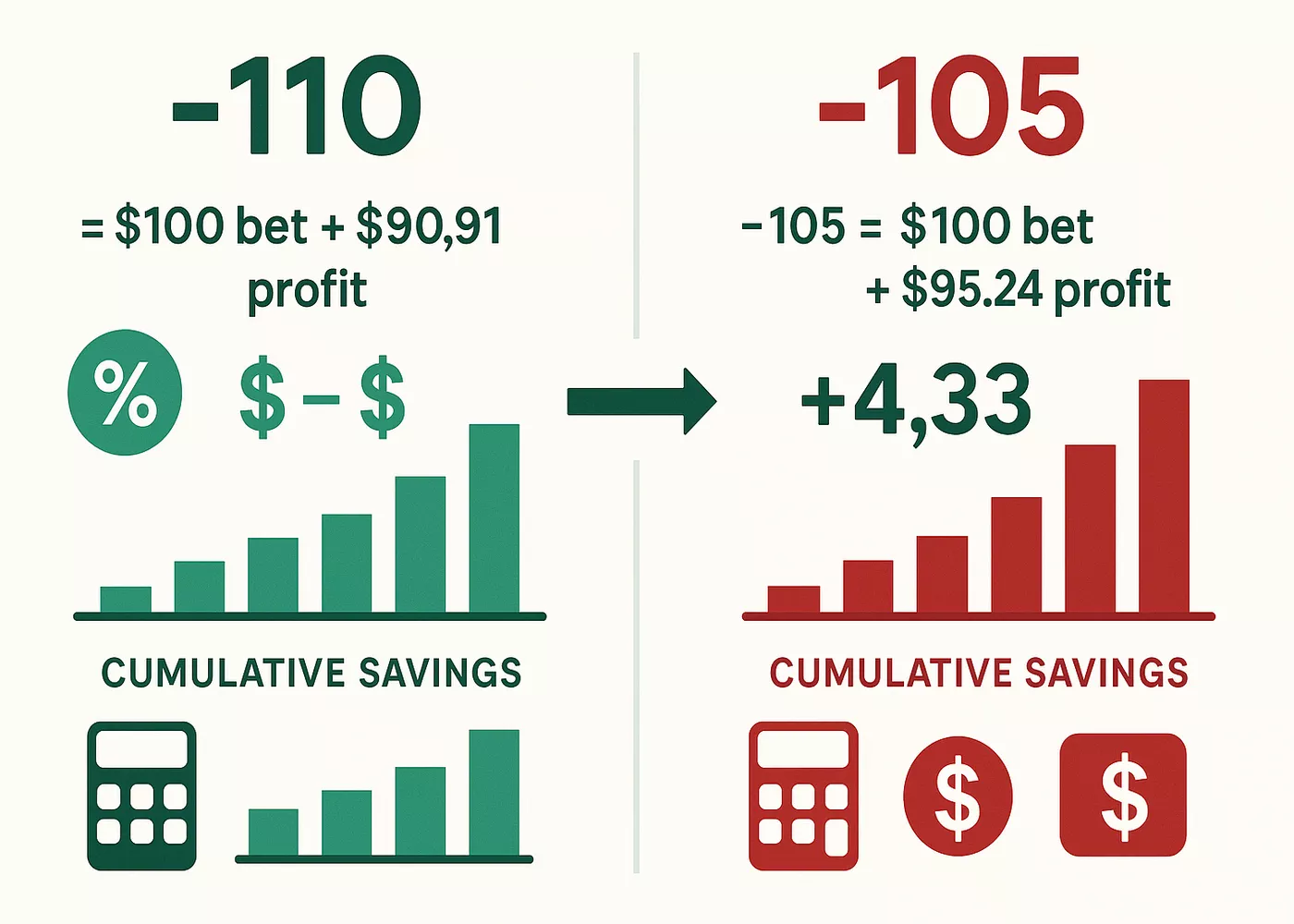
Odds quality matters more than anything else except licensing, yet most recreational bettors barely pay attention to it. They see -110 on a spread and assume that’s just what spreads cost, not realizing that sharp books offer -105 or even lower on identical bets. That five-point difference looks trivial on a single bet but becomes thousands of dollars over a year of regular betting.
The math is straightforward: betting $110 to win $100 at standard -110 odds requires winning 52.38% of your bets to break even. At -105, you only need 51.22%. That single percentage point of breathing room is massive for anyone betting regularly. It’s the difference between barely breaking even and generating solid profits with the same handicapping skill.
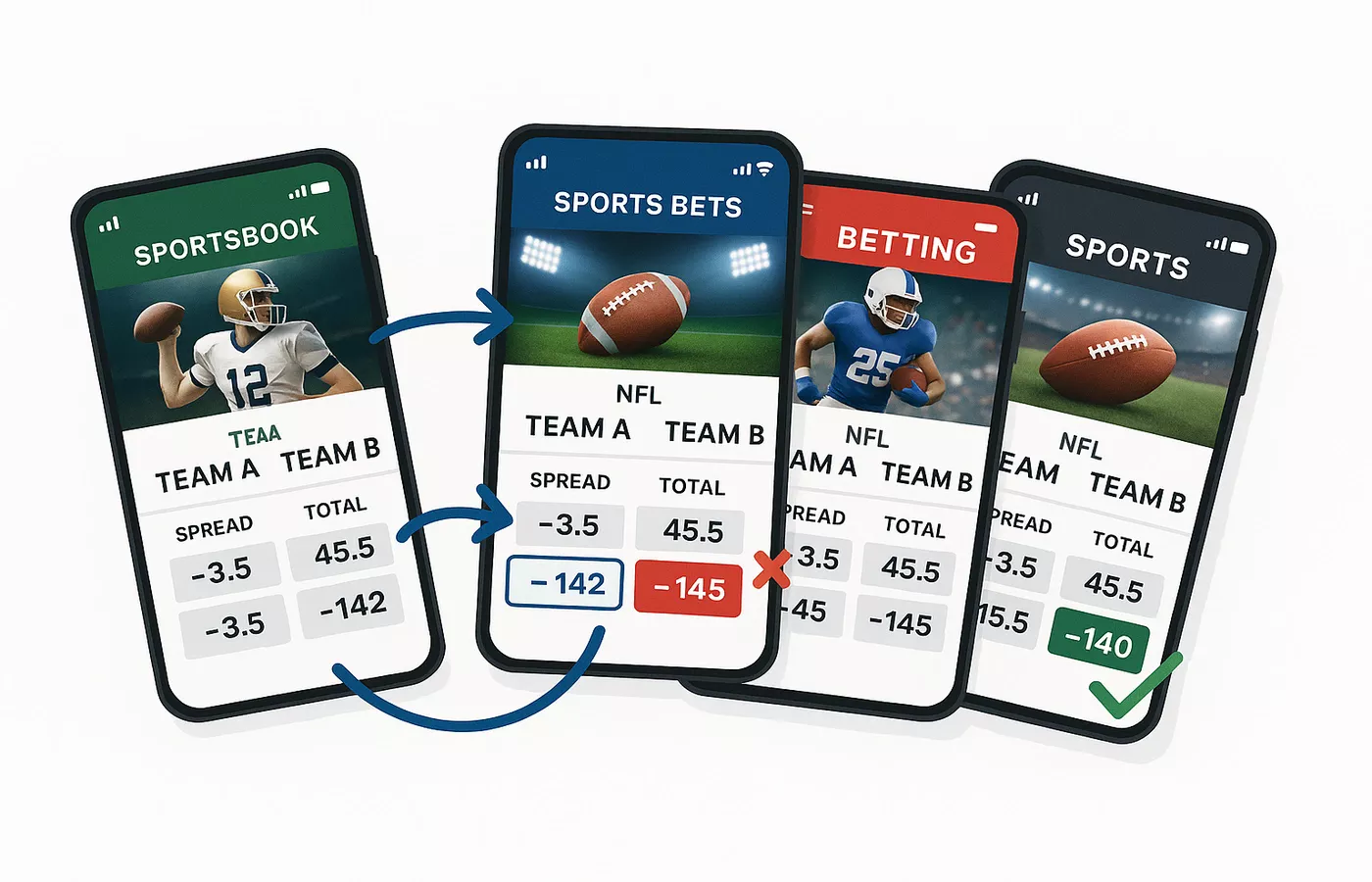
Comparing odds between books before every bet should become automatic, like checking gas prices before filling up. If five books offer -110 on the Patriots and one offers -108, betting at -108 gives you better value for identical risk. Over hundreds of bets, always taking the best available price adds up to serious money. There are odds comparison websites that make this easy—Oddschecker and OddsPortal show you every book’s odds on major events side-by-side.
Different bookmakers have different margin structures based on their target market. Pinnacle targets sharp bettors with razor-thin margins around 2%, accepting that they’ll lose occasionally to pros but profiting from volume and efficiency. Recreational books targeting casual bettors often carry 5-7% margins, making money from less sophisticated customers who don’t line shop.
The tricky part is that odds quality varies by sport and bet type even within the same bookmaker. A book might offer competitive NFL odds but terrible NBA odds because they’re more confident pricing football. They might have tight margins on spreads but massive margins on props. You can’t judge overall odds quality from one or two bets—you need to compare across multiple sports and bet types to see patterns.
Some books advertise “reduced juice” or “better odds” as selling points, offering -105 instead of -110 as their standard point spread price. This seems like a small gimmick but it genuinely saves money. If you’re betting point spreads regularly, finding a book with reduced juice pays for itself quickly. The cumulative savings from five-point better prices hundreds of times per year adds up to more than you’d ever extract from deposit bonuses.
Welcome Bonuses: Reading the Fine Print
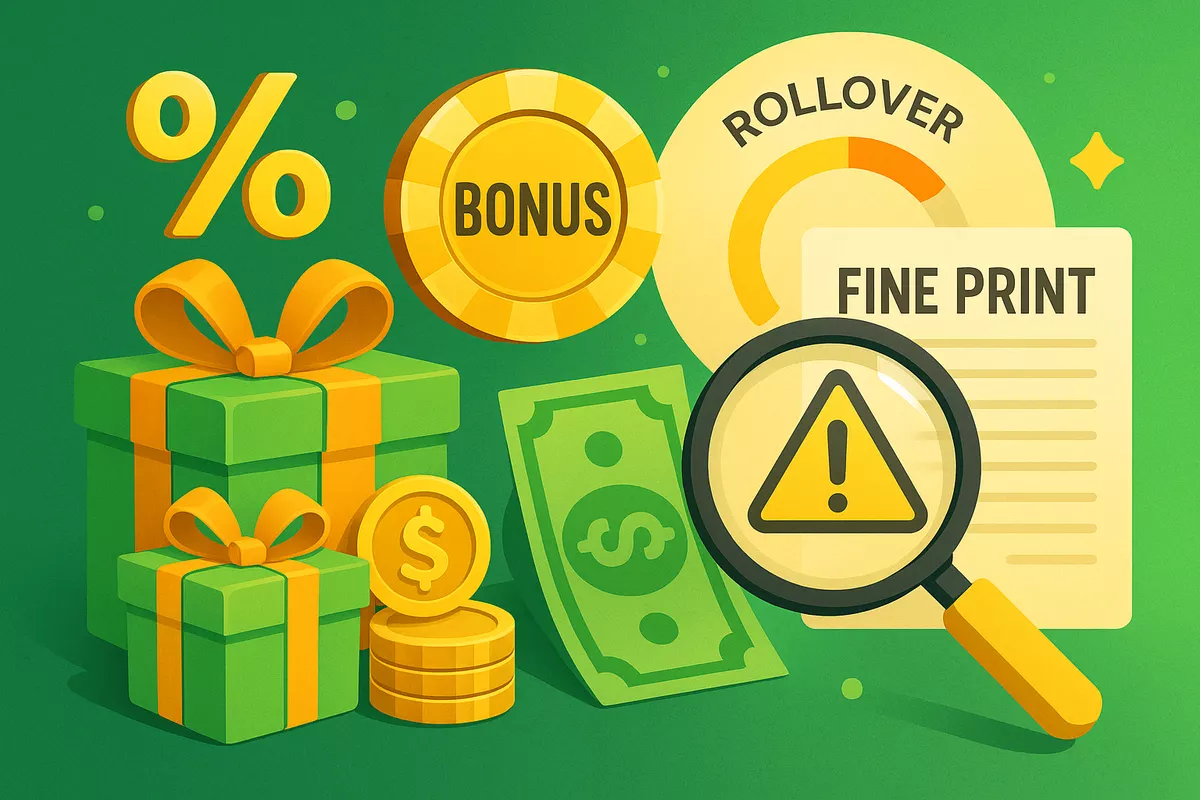
Every sportsbook advertises massive welcome bonuses—deposit $1,000 and get $1,000 free! Bet $500 risk-free on your first wager! These offers look incredible until you read the terms and realize that extracting full value requires betting amounts that most people can’t afford or meeting rollover requirements designed to make withdrawal nearly impossible.
The typical deposit match bonus requires you to bet the bonus amount anywhere from 5x to 25x before withdrawing anything. A $1,000 bonus with 10x rollover means placing $10,000 in bets before you can withdraw a penny. At -110 odds with expected 50% win rate, you’d lose roughly $450 just from the vig before clearing the bonus. Suddenly that “free” $1,000 costs you almost half its value to extract.
Risk-free bet offers are marginally better but still overrated. They’re not actually risk-free—you’re fronting your own money and only getting a refund in site credit if you lose, not cash. That site credit usually comes with its own rollover requirements. And if your risk-free bet wins, you get nothing extra. The expected value is positive but much smaller than the advertised amount suggests.
The best bonuses for most bettors are simple: deposit matches with reasonable rollover (5x or less), straight cash bonuses without restrictions, or odds boosts on specific bets. Anything requiring more than 10x rollover or lasting longer than 30 days probably isn’t worth pursuing unless you’re already betting huge volume.
Read every word of bonus terms before depositing. Look for the rollover requirement, time limit to clear the bonus, which bets count toward rollover (often parlays don’t count or count at reduced rates), minimum odds requirements (many bonuses only count bets at -200 or longer), and what happens if you withdraw before clearing the bonus (usually you forfeit everything).
Don’t let bonuses drive your bookmaker selection. A slightly better bonus isn’t worth dealing with a book that has terrible odds, slow withdrawals, or predatory practices. Think of bonuses as nice perks, not primary selection criteria. The money you save from better odds over months of betting dwarfs any one-time bonus value.
Payment Methods and Withdrawal Speed
Getting money into a sportsbook is always easy—they’ll accept credit cards, debit cards, PayPal, wire transfers, cryptocurrency, prepaid cards, and probably your firstborn if you offered. Getting money out is where you discover which books actually respect their customers versus which ones hope you’ll lose everything and never need to withdraw.
The best books process withdrawals within 24-48 hours consistently. You request a withdrawal, it gets approved the next business day, and money hits your account shortly after. PayPal and cryptocurrency withdrawals are often instant once approved. Bank transfers take 2-3 business days due to banking system limitations, not the sportsbook dragging their feet.
Red flags include requiring excessive documentation for withdrawals that you didn’t need for deposits, arbitrary withdrawal limits that force you to make multiple requests, processing delays that stretch past a week without explanation, and customer service that suddenly becomes unresponsive when you’re trying to get your money out.
Some books require you to withdraw using the same method you deposited with, which becomes problematic if you deposited with a credit card (can’t withdraw to credit cards in most states). Others charge withdrawal fees, especially for bank wires. These aren’t deal-breakers but factor them into your decision.
Test the withdrawal process early with a small amount. Don’t wait until you have thousands in your account to discover that withdrawals require seventeen forms of ID and take two weeks. If a book makes withdrawing your own money unnecessarily difficult, find a different book immediately.
Cryptocurrency has become increasingly popular for both deposits and withdrawals because it’s fast, has low fees, and doesn’t involve banks that might flag gambling transactions. If you’re comfortable with crypto, prioritize books that support it. The speed and convenience are game-changing compared to traditional banking methods.
Mobile Experience: Where You’ll Actually Bet
Unless you’re parked at a desktop all day, you’ll place most bets through mobile apps. A clunky app that crashes during crucial moments or makes simple tasks complicated will frustrate you into either betting less or switching books entirely.
Good apps load quickly, navigate intuitively, display odds clearly, and process bets smoothly. You should be able to go from opening the app to placing a bet in under 30 seconds. If finding a specific bet type or sport requires digging through multiple menus, the design has failed.
Live betting particularly depends on app quality. Odds change every few seconds during games, so lag or crashes mean missing valuable betting opportunities. The best live betting apps update smoothly, clearly indicate when odds are locked versus available, and process bets quickly enough that you’re not constantly getting rejected due to line movements.
Features that matter include easy deposit/withdrawal within the app, quick access to bet history, ability to easily track open bets, cash out options for eligible bets, and push notifications for bet results. Bonus features like live streaming, detailed statistics, and betting trends are nice but secondary to core functionality.
Download apps for books you’re considering and test them before depositing significant money. Place a few small bets to understand the workflow. Try depositing and withdrawing small amounts. Use the app during peak times like Sunday NFL games when servers are stressed. If the app frustrates you during testing, it’ll be unbearable when you’re trying to get real money down on time-sensitive bets.
Some books excel at mobile but have terrible desktop sites, or vice versa. Decide where you’ll primarily bet and prioritize accordingly. Most modern bettors are mobile-first, making app quality more important than desktop experience.
Customer Service: When Things Go Wrong
Eventually something will go wrong—a bet gets graded incorrectly, a deposit doesn’t show up, the app crashes at the worst possible moment. How the bookmaker handles problems reveals their true character and determines whether minor issues become major headaches.
Quality customer service means multiple contact methods (chat, email, phone), reasonable response times (minutes for chat, hours for email), knowledgeable representatives who understand both betting and their own platform, and actual problem resolution, not just apologies.
Test customer service before you need it. Send a simple question through their chat system and see how long response takes. Call their phone support and see if you reach a human quickly or get trapped in automated menu hell. Email a question and clock their response time.
Books that make customer service difficult to access—hiding contact information, only offering email with 72-hour response times, or staffing support with people who clearly know nothing about sports betting—are telling you they don’t want to hear from you. When you have real money locked up and need help, this becomes infuriating.
The best indicator of customer service quality is reading forums and review sites for patterns. Every book has some complaints, but look for consistency. If multiple people report the same issues going unresolved, that’s the book showing you their true priorities.
Live chat is generally the most effective support channel. You get immediate responses and have written records of what was promised. Phone support works for complex issues but lacks documentation. Email creates records but often involves long delays and generic responses that don’t address your specific situation.
Account Limitations and How Books Treat Winners
The dirty secret of sports betting is that most books don’t want winners as customers. They want recreational losers who bet parlays on their favorite teams and gradually donate their bankroll. If you win consistently, many books will limit your maximum bet sizes to laughably small amounts, effectively banning you without officially closing your account.
Limitations usually start subtly. Your max bet on NFL sides drops from $5,000 to $500. Then $100. Then $20. Eventually you can’t bet enough to cover the gas money to drive to the casino. The book hasn’t technically banned you, but they’ve made it clear winners aren’t welcome.
Some books are notorious for aggressive limiting, capping accounts that win just a few hundred dollars or show any sign of sophisticated betting. Others have higher tolerance, letting winners bet decent amounts as long as they’re also providing action on other markets. A precious few actually welcome sharp bettors and never limit anyone.
If you’re a recreational bettor who’ll probably lose long-term, limitations won’t affect you. If you’re serious about betting and might actually win, choosing books that won’t limit you becomes paramount. Research which books have reputations for quick limits versus which ones let winners play.
Signs you might get limited include consistently beating closing lines, betting unusual amounts that suggest you’re calculating specific edges, winning too much too quickly, only betting favorable lines and never casual bets, and withdrawing more than you deposit over time.
Once limited at one book, you can’t undo it. They’ve marked you as sharp and will never restore full betting limits. This makes choosing initial books carefully important—you only get one chance at each book’s welcome bonus and full betting limits.
Market Coverage and Bet Types
Books vary wildly in how many betting options they offer. Some stick to basic spreads, totals, and moneylines. Others offer hundreds of props per game, alternative lines, same-game parlays, and exotic bet types you didn’t know existed.
Mainstream American sports (NFL, NBA, MLB, NHL) are covered extensively everywhere, though prop bet availability varies. If you bet these sports primarily, any major book will have adequate coverage.
Soccer, tennis, golf, MMA, and other international sports see massive variation in coverage. Some books offer every third-division Romanian soccer match while others barely cover the Premier League. If you bet these sports, verify coverage before committing to a book.
Player props have exploded in popularity, and books differ in how many they offer. During NFL season, some books post 100+ player props per game while others offer just basic ones for star players. If you specifically bet player props, choosing books with extensive offerings is essential.
Live betting markets also vary significantly. Some books offer only basic spread and total adjustments during games. Others let you bet on the outcome of every drive in football, every at-bat in baseball, or whether the next basket will be a three-pointer. Quality and quantity of live markets should factor into your decision if you bet in-play frequently.
Alternative lines let you buy or sell points for different odds. Instead of betting the spread at -3 (-110), you might take -7 (+150) or +3.5 (-140). Books increasingly offer these, but the range varies. More alternatives mean more opportunities to find value.
Niche bet types like same-game parlays, round robins, and teasers might matter depending on your betting style. Not every book offers every bet type, and rules vary even when they do. Make sure your preferred bet types are available and understand specific rules before depositing.
Technology and Stability
Nothing frustrates bettors more than trying to place a time-sensitive bet and having the app crash or the website timeout. Technical problems cost you money when you miss valuable lines or can’t hedge existing bets.
Well-funded books with experienced technology teams rarely have stability issues. Their apps work smoothly even during peak traffic, websites load quickly, and betting processes are reliable. Newer or smaller books sometimes struggle with technology, leading to frequent outages or slow performance during crucial moments.
You can gauge technology quality during account creation and initial use. If the registration process is clunky, if the app feels sluggish during off-peak hours, or if you encounter bugs during basic tasks, expect worse problems when thousands of people are trying to bet simultaneously.
Check social media on NFL Sundays to see which books have users complaining about crashes or slowdowns. Every book has occasional issues, but some have problems every single week during peak betting times. Those are books to avoid regardless of their other qualities.
Security technology also matters. Books should offer two-factor authentication to protect your account. They should use proper encryption for all data transmission. They should have clear security practices and respond quickly to potential breaches. Your betting account holds real money—it should be protected like a bank account.
Geolocation technology affects mobile betting. Books must verify you’re in a legal betting state, but some do this more smoothly than others. Bad geolocation implementation means constantly having to confirm your location or being unable to bet despite being in a legal state. This gets annoying quickly if you bet frequently.
The Reality of Promotions and Loyalty Programs
After the welcome bonus, books try retaining customers through ongoing promotions and loyalty programs. These range from genuinely valuable to complete wastes of time designed to encourage bad betting habits.
Odds boosts are the most straightforward promotion—the book offers better odds on specific bets. A team that’s normally +150 might be boosted to +200 for that day. These can offer genuine value if you were planning to bet that team anyway. The catch is maximum bet limits, usually $25-100, which limits how much value you can extract.
Profit boosts give you tokens to increase any bet’s payout by a certain percentage. A 50% profit boost on a +200 bet turns it into +300. These are valuable and flexible since you choose which bets to boost. Again, maximum bet amounts limit total value.
Insurance promotions refund your bet (usually as site credit) if specific conditions occur—like getting your money back if your team loses by exactly one point. These sound great but usually have expected value barely above zero. The conditions are carefully calculated to minimize the book’s cost.
Loyalty programs award points based on betting volume that can be exchanged for bonuses or merchandise. Unless you’re betting massive volume, these programs return pennies on the dollar. They’re designed to make you feel rewarded while encouraging you to bet more than you otherwise would.
Free bet promotions where you get a free $10 bet for betting $100 on specific events are marginally valuable but come with strings attached. The free bet usually can’t be withdrawn—only winnings from it can—and often expires quickly, forcing you to use it suboptimally.
The most valuable promotions are simple: odds boosts on bets you’d make anyway, profit boost tokens with reasonable maximums, and deposit bonuses with low rollover. Everything else is mostly marketing designed to increase your betting volume rather than provide genuine value.
Data and Analytics Tools
Some books provide extensive statistics, trends, and analytics tools directly in their platforms. Others offer just basic information, requiring you to research elsewhere before betting.
Quality data features include detailed team and player statistics updated in real-time, head-to-head records and trends, injury reports and lineup information, weather conditions for outdoor games, and historical betting trends showing how the public is wagering.
Advanced books offer predictive analytics, showing win probability calculations or expected scores based on their models. Some provide detailed breakdowns of why lines are set where they are. This information helps you make more informed betting decisions without leaving the app.
The value of built-in analytics depends on your betting approach. If you do extensive research using external tools, basic information might suffice. If you prefer betting quickly based on available information, comprehensive built-in tools become valuable.
Be skeptical of betting tools that push you toward parlays or other high-house-edge bets. Some books disguise marketing as analytics, showing “hot parlays” or “popular bets” that encourage poor betting decisions. Real analytics help you evaluate bets objectively, not chase bad bets that profit the house.
Live statistics during games enhance the in-play betting experience. Seeing real-time stats like possession percentages, shot attempts, or momentum indicators helps you identify live betting opportunities. Books with integrated live stats create better live betting experiences than those requiring you to watch games separately.
Historical bet tracking helps you analyze your own performance. Good books let you export your betting history, filter by various criteria, and see detailed profit/loss breakdowns. This data is invaluable for serious bettors trying to identify strengths and weaknesses in their approach.
Geographic Restrictions and Multi-State Operations
Sports betting legality varies by state, and books must be licensed separately in each state they operate. If you travel frequently or live near state borders, choosing books that operate in multiple states provides continuity.
Major operators like FanDuel, DraftKings, and BetMGM have licenses in most legal states. You can use the same account across states, though bonuses and promotions are typically state-specific. Your betting history and account balance travel with you.
Smaller or regional books might only operate in one or two states. If you choose these books and travel somewhere they don’t operate, you can’t access your account until returning. This becomes frustrating if you travel frequently or want to bet while on vacation.
State-specific regulations create odd situations. Some states allow online betting statewide while others require you to register in-person at a casino first. Some states prohibit betting on in-state college teams. Some have different tax rates that affect odds quality. Understanding your state’s specific rules helps set expectations.
If you live near state borders, you might benefit from having accounts in multiple states. Different states have different books available, and occasionally regulatory differences create arbitrage opportunities where the same bet has different odds due to state-specific factors.
Books handle the technical aspects of multi-state operations differently. Some require you to download different apps for different states. Others use one app that adjusts based on your location. The best implementations make crossing state lines seamless—your app just works wherever you are.
Security Best Practices
Your betting account is a financial account that needs appropriate security precautions. Books have security measures, but you’re responsible for your own account safety.
Use unique, strong passwords for each betting account. If one book gets breached, you don’t want that password compromising other accounts. Password managers make this easy—you don’t need to memorize dozens of complex passwords.
Enable two-factor authentication everywhere it’s offered. This prevents someone who obtains your password from accessing your account without your phone. The minor inconvenience of entering a code is worth the massive security improvement.
Be skeptical of emails claiming to be from sportsbooks. Phishing attacks targeting bettors are common. Legitimate books won’t ask for your password via email or send suspicious attachment. When in doubt, log into your account directly rather than clicking email links.
Monitor your account regularly for unauthorized activity. Check your bet history and transaction logs. If you see bets you didn’t place or withdrawals you didn’t authorize, contact customer service immediately. The sooner you report problems, the better your chances of resolution.
Avoid betting on public WiFi networks where traffic might not be encrypted. Use cellular data or wait until you’re on a trusted network. The risk of someone intercepting your traffic on public WiFi is low but non-zero, and why take chances when dealing with financial accounts?
Red Flags and Warning Signs
Some warning signs suggest a bookmaker isn’t worth your time even if they claim to be legitimate. No visible licensing information is disqualifying immediately—if you can’t verify their license, assume they’re unlicensed and avoid them entirely.
Consistently worst odds across multiple sports and bet types suggests they’re either incompetent at pricing markets or deliberately extracting maximum margins from unsophisticated customers. Either way, you’re paying too much to bet there. If every bet is 5-10 points worse than the market, go elsewhere.
Aggressive marketing with unrealistic bonus offers often indicates desperation or shady business practices. Legitimate, established books don’t need to offer 500% deposit matches to attract customers. Offers that seem too good to be true usually are—the terms are impossible to meet or the book has no intention of paying out anyway.
Slow or non-payment history shows up in user reviews on forums and complaints. Isolated complaints about one slow withdrawal might be flukes, but consistent patterns of multiple people complaining about not getting paid or facing delays of weeks should raise massive red flags. Where there’s smoke, there’s usually fire.
Terms and conditions that are intentionally confusing or contradictory suggest the book is trying to hide unfavorable terms. Legitimate books have clear, readable terms that explain exactly how everything works. If you need a lawyer to understand the bonus terms, that’s probably intentional.
Restricted withdrawals where the book only allows withdrawing small amounts at a time or makes you jump through endless hoops to withdraw anything suggests they’re trying to hold onto your money. Legitimate books want smooth withdrawal processes because happy customers who can easily access their money become repeat customers.

The Multi-Bookmaker Strategy
Professional bettors maintain accounts with multiple bookmakers—typically 5-10 active accounts at any given time. This isn’t excessive or complicated; it’s smart strategy that maximizes value and provides redundancy.
Line shopping requires multiple accounts by definition. If you only have one account, you’re stuck accepting whatever odds they offer. With five accounts, you can check all five and always take the best price. The savings from line shopping with multiple books vastly exceeds the value of loyalty to any single book.
Maximizing bonuses means opening accounts strategically to capture welcome offers from multiple books. Each book offers one-time new customer bonuses that often provide the best value you’ll ever get from that book. Spreading your action across multiple books lets you collect multiple welcome bonuses over time.
Avoiding limitations becomes necessary if you win consistently. When one book limits your bets to trivial amounts, you shift volume to other accounts. Having multiple established accounts means you’re never completely shut out of betting, even if individual books ban you.
Managing multiple accounts isn’t as complicated as it sounds. Most books have good mobile apps, so you just have five apps on your phone instead of one. Before placing any bet, open all five apps, check odds, and bet where the price is best. This adds maybe thirty seconds to your betting process and saves you significant money long-term.
The psychological benefit of multiple accounts is not feeling dependent on any single book. If one book pisses you off with bad customer service or closes your account unfairly, you’re mildly annoyed rather than desperately trying to find a new place to bet. That independence lets you be more selective about where you maintain relationships.
Making Your Choice: Practical Decision Framework
Different bettors should prioritize different factors based on how they bet and what they value. A casual bettor dropping $20 on games for fun has completely different needs than someone betting seriously trying to generate income.
Casual recreational bettors should prioritize user experience and bonuses over odds quality. If you’re betting $20 per game for entertainment, getting -110 versus -105 odds matters less than having a smooth app you enjoy using. Welcome bonuses and promotions provide outsized value relative to your betting volume. Don’t overthink it—pick a well-reviewed, licensed book with a good app and enjoy yourself.
Regular but small-stakes bettors—people betting a few hundred dollars per week—should focus on odds quality and withdrawal convenience. The cumulative savings from better odds add up to real money at this volume. Make sure withdrawal processes are smooth because you’ll presumably be withdrawing winnings periodically and don’t want to wait forever.
High-volume bettors need sharp books that offer competitive odds and won’t limit you for winning. Pinnacle is the obvious choice for this profile. Books that welcome sharp action might offer less flashy promotions but will actually let you bet significant amounts consistently. You need the best prices and highest limits because your volume means every point of odds matters substantially.
Sharp bettors who win consistently should maintain relationships with multiple books knowing that limitations are inevitable. Focus on books with reputations for accepting sharp action, even if their promotions are less generous. Your edge comes from skill, not from bonuses, so prioritize being able to actually get bets down.
Live betting enthusiasts should prioritize books with robust in-play offerings and live streaming. Check which books offer the most live markets for your preferred sports and whether their live odds update smoothly. Integration between streaming and betting matters if you watch and bet simultaneously.
The honest truth is that no single bookmaker is perfect for everyone. The best strategy is maintaining accounts with 3-5 different books that excel in different areas—one with the best NFL odds, one with great live betting, one that offers reduced juice, one with reliable fast withdrawals. This gives you flexibility to always use the right tool for each situation.
Choosing bookmakers is an ongoing process, not a one-time decision. Books change ownership, odds quality shifts, features improve or degrade, and your needs evolve as you gain experience. Reevaluate your book choices periodically and don’t feel locked into relationships that no longer serve you well.
The goal is maximizing your betting value while minimizing hassle. Every dollar saved through better odds is a dollar you can bet elsewhere. Every hour not spent fighting with customer service over withdrawal delays is time better spent finding good bets. Choose wisely, maintain flexibility, and never hesitate to move your business elsewhere when a book stops meeting your needs.
Discover the top operators on our main site.
