
 Available in US
Betting Markets Explained: All Bet Types
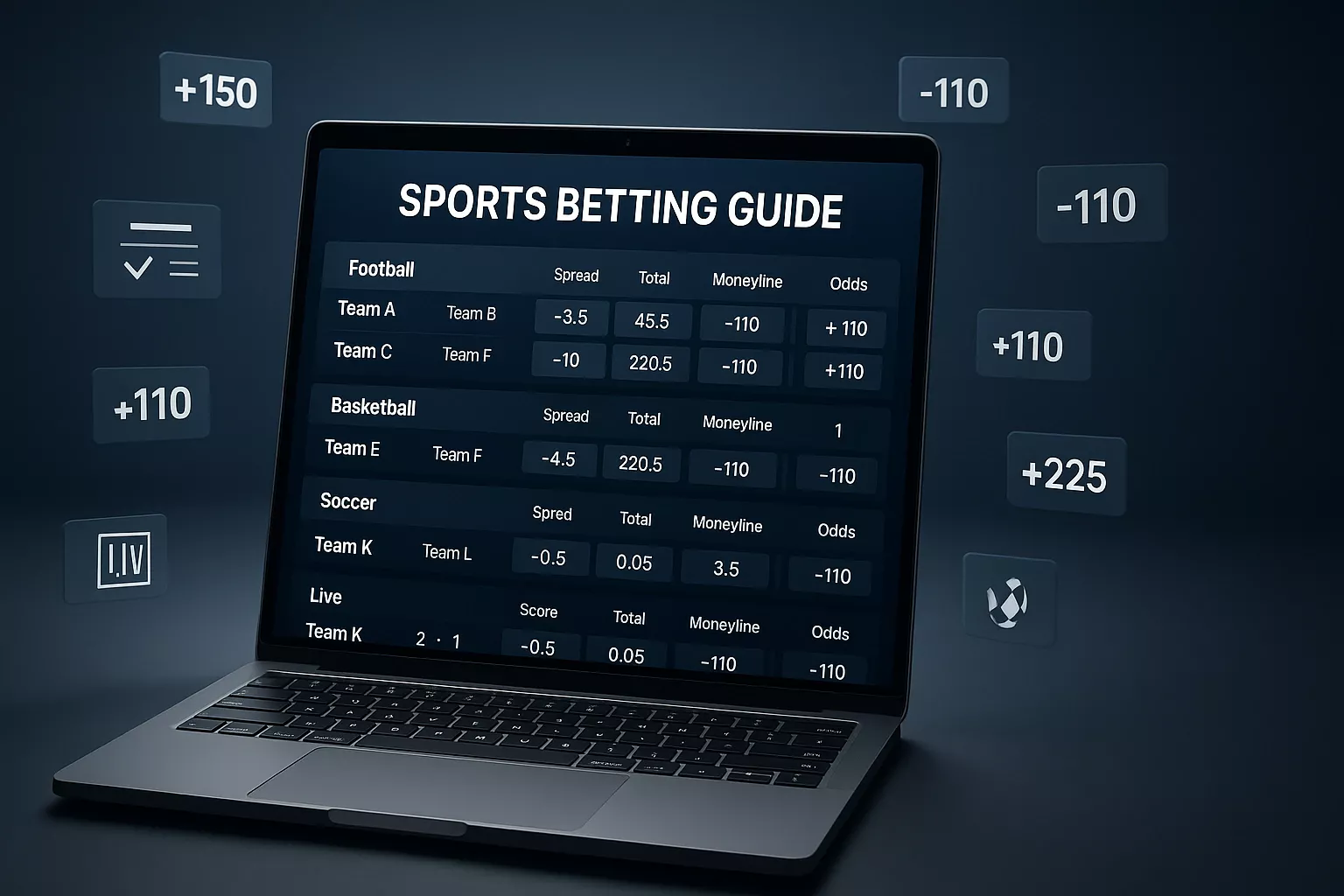
The first time you open a modern sportsbook app and scroll through the available bets for a single game, it feels like someone dumped a phone book on your lap. Hundreds of options. Thousands of numbers. Terms you’ve never heard before. Asian Handicap? Both Teams To Score? What happened to just picking who wins?
Here’s the reality betting markets have evolved from simple win-or-lose propositions into a sophisticated menu of options designed to appeal to every type of bettor, from the casual fan throwing twenty bucks on their favorite team to the professional grinding tiny edges across dozens of bets daily. Some major soccer matches now feature over fifteen hundred different betting markets. That’s not a typo. One thousand five hundred ways to bet on ninety minutes of football.
This explosion of choice is fantastic if you know what you’re looking at. It means you can find markets that match your knowledge, your risk tolerance, and your betting style. But if you don’t understand what these markets actually represent or how they work, you’re essentially playing roulette with extra steps.
This guide breaks down every major betting market you’ll encounter, from the basics that everyone should understand to the advanced options that serious bettors use to find value. We’ll cover how bookmakers create these markets, when to use each type, and most importantly, which markets deserve your attention and which ones are designed to separate you from your money as efficiently as possible.
Think of betting markets like tools in a toolbox. A hammer is great for nails but terrible for screws. Same principle applies here. Once you understand what each market is actually measuring and how the odds are constructed, you can pick the right tool for the situation instead of randomly grabbing whatever looks interesting.
Learn the secrets behind how bookies set their odds to find value.
Understanding Betting Markets: The Foundation
Before we dive into specific bet types, let’s establish what a betting market actually is, because this confuses people more than it should. A betting market is simply a category of outcomes that bookmakers offer odds on. The match result who wins is a market. Total goals scored is a different market. First player to score is another market. They’re all related to the same game, but they’re measuring different things.
Bookmakers create markets based on what bettors want to wager on and what they can price effectively. Popular markets get sharp odds because thousands of bets provide feedback that helps bookies calibrate their lines. Obscure markets carry wider margins because there’s less information and less competition.
Market liquidity matters more than most people realize. A liquid market has lots of betting action, which means the odds are more efficient and closer to true probability. The NFL point spread is incredibly liquid. The number of throw-ins in a Norwegian second division soccer match? Not so much. Bookies protect themselves on illiquid markets by building in larger margins, which means worse odds for you.
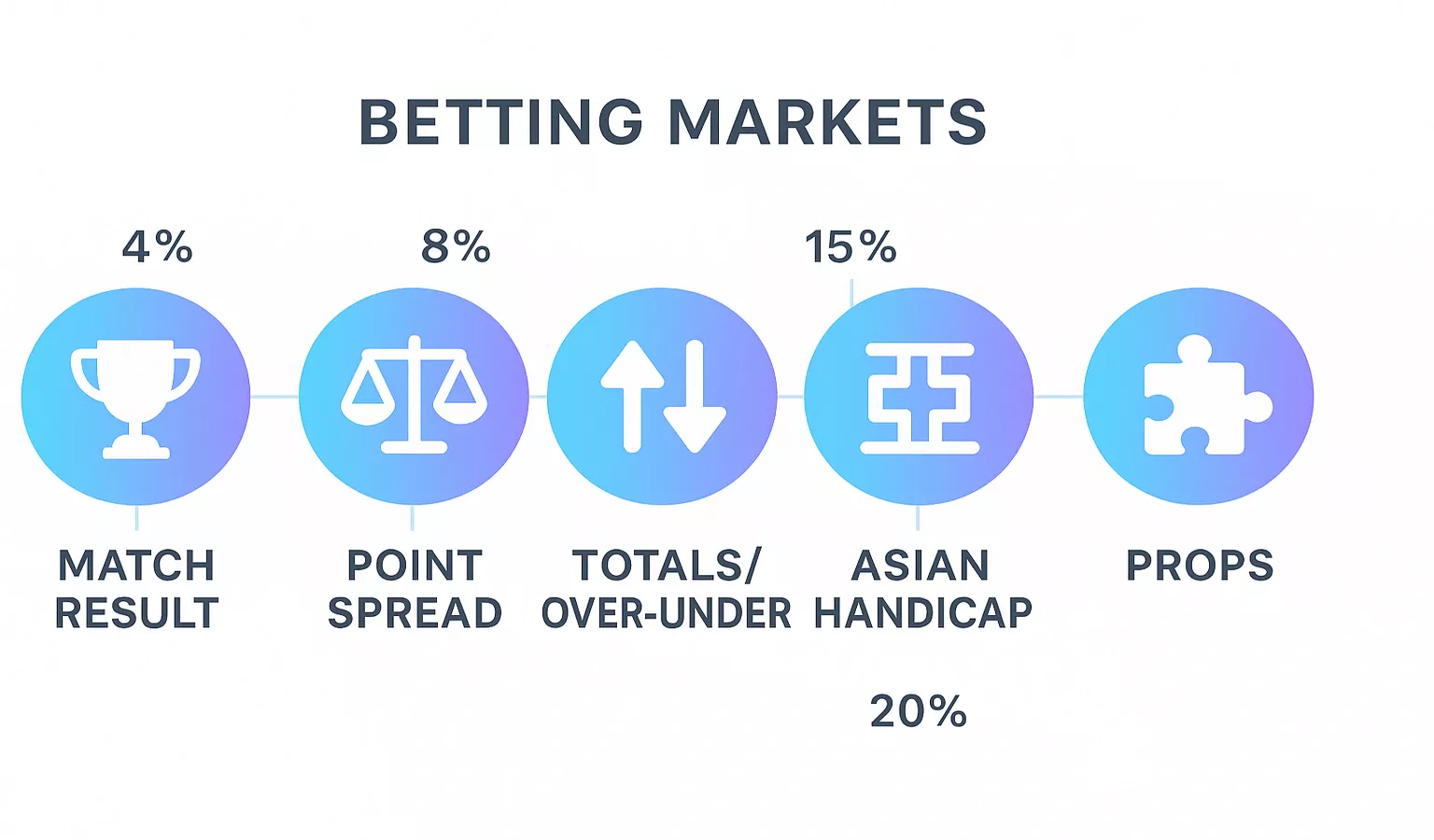
The margin that built-in fee we keep talking about varies dramatically between markets. A standard NFL point spread at -110 on both sides carries about a 4.5% margin. A five-team parlay has an implicit margin of over 20%. Proposition bets can run anywhere from 8% to 30% depending on how exotic they are. This is why understanding markets matters you’re not just picking outcomes, you’re deciding how much you’re willing to pay for the privilege of betting.
Think about it this way: betting on who wins an NBA game at -110 might carry a 4% bookmaker margin. Betting on whether LeBron James scores exactly 27 points could carry a 25% margin. Both bets might seem equally interesting, but one gives you five times better value relative to the true probability. That’s the difference between a smart bet and a sucker bet.
Essential Bet Types: The Foundation of Sports Betting
Let’s start with the fundamentals the bet types that have existed since bookmaking began and still account for the majority of betting volume today.
Moneyline Bets: Pure and Simple
A moneyline bet is the most straightforward wager in sports betting. You pick who wins. That’s it. No point spreads, no complications, just predict the winner and collect if you’re right.
In soccer, this is called 1X2 betting because you have three options home win (1), draw (X), or away win (2). The draw option is what separates soccer from American sports, and it fundamentally changes how you should think about the bet. A team might be heavily favored to win, but draws happen in roughly 25% of soccer matches, which means betting the favorite straight up isn’t as safe as it looks.
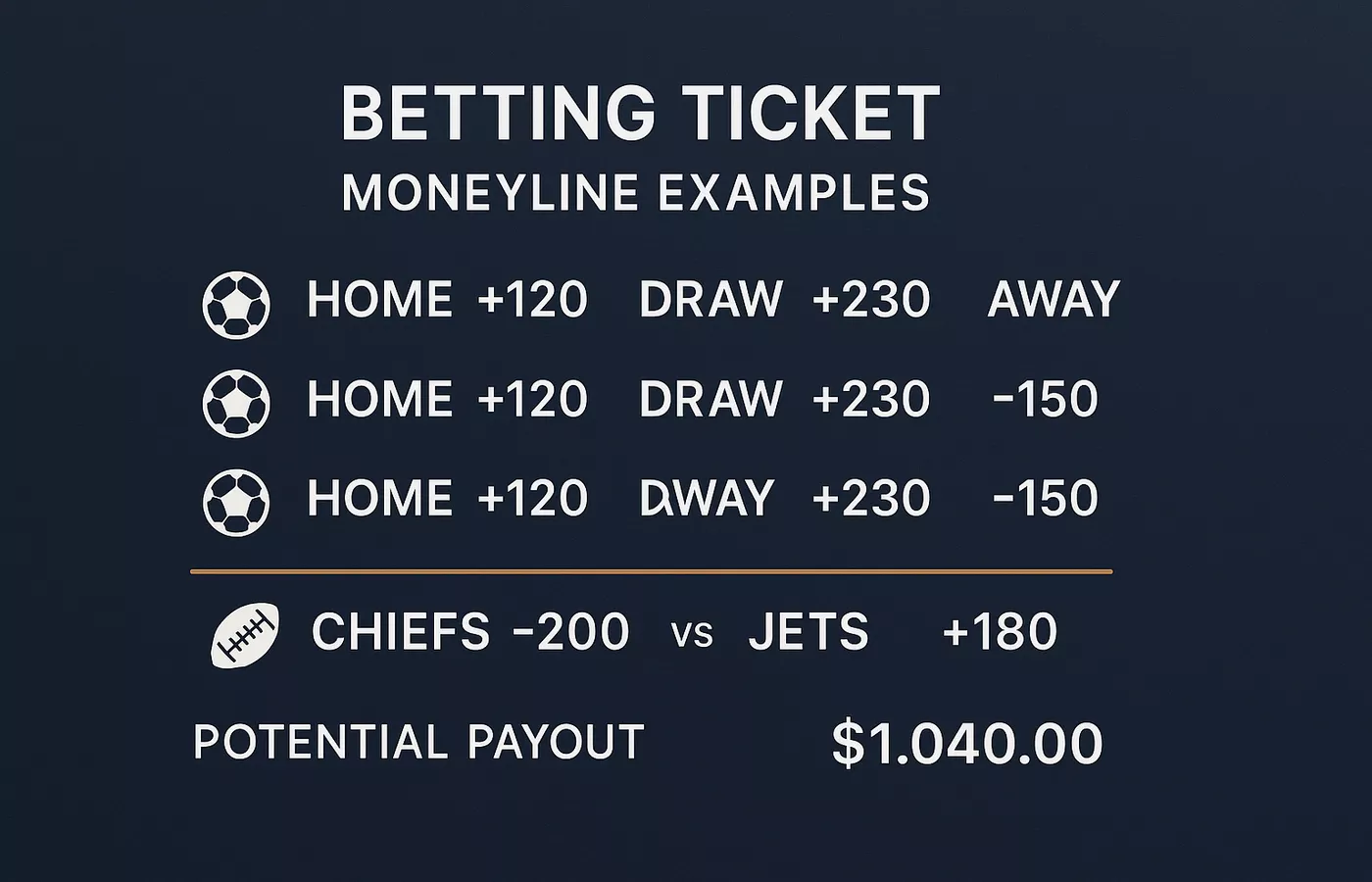
American sports without ties basketball, baseball, hockey in regulation offer two-way moneylines. The odds tell you how much you profit relative to your stake. Favorites show negative numbers like -200, meaning you need to bet $200 to win $100. Underdogs show positive numbers like +180, meaning a $100 bet profits $180.
The beautiful simplicity of moneyline betting is also its limitation. When there’s a heavy favorite, the odds get so lopsided that betting them offers terrible value. Sure, the Kansas City Chiefs might beat a terrible team 95% of the time, but if you’re getting -2000 odds, you’re risking $2000 to profit $100. One upset wipes out twenty wins. That’s not a sustainable strategy.
This is exactly why point spreads were invented to make lopsided matchups interesting to bet on.
Point Spreads: Leveling the Playing Field
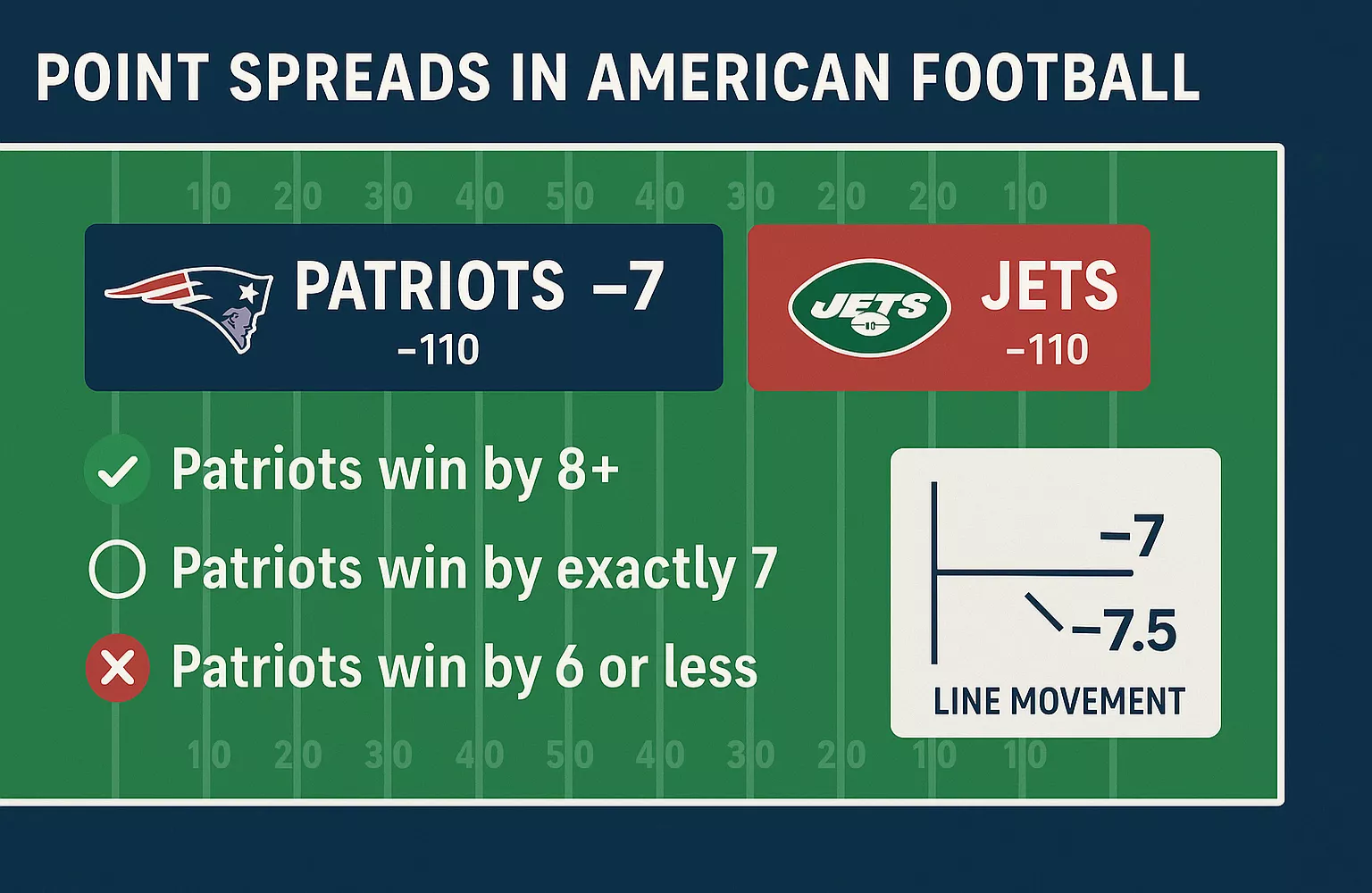
Point spreads transform uneven contests into roughly 50-50 propositions by giving the underdog a head start. If the Patriots are -7 against the Jets, they need to win by eight or more points for a Patriots bet to cash. Win by exactly seven and it’s a push everyone gets their money back. Win by six or less, or lose outright, and the Jets bet wins.
The beauty of spreads is that both sides typically offer the same odds usually -110, occasionally -105 or -115 depending on the book. This makes them more attractive than lopsided moneylines because you’re getting reasonable odds regardless of which side you prefer.
Spreads move constantly based on betting action and new information. A line might open at Patriots -7, then move to -7.5 or -6.5 as money comes in on one side or the other. Sharp bettors obsess over these movements because they reveal where the smart money is going. If a line moves from -7 to -9.5 overnight despite no injury news, that’s a massive signal that professionals are hammering one side.
Half-point spreads eliminate the possibility of pushes. Patriots -7.5 means they must win by eight or more no ties possible. Some bettors hate this because they’d rather have the push possibility than risk losing by half a point. Others prefer the clarity. It’s personal preference, but understand that bookmakers adjust the odds slightly when eliminating the middle number.
Asian Handicap: Point Spreads on Steroids
Asian Handicaps are wildly popular in soccer betting and represent a more sophisticated version of point spreads. The basic concept is identical give one team a handicap to level the field. But Asian Handicaps offer more granular options and eliminate draws through clever mathematics.
A -0.5 Asian Handicap means your team must win outright. Simple enough. A -1.0 handicap means they must win by two or more goals a one-goal win refunds your stake. A -1.5 handicap requires a two-goal victory to profit.
Quarter-goal handicaps create split stakes. A -0.75 handicap splits your bet between -0.5 and -1.0. If your team wins by one goal, half your stake wins at -0.5 and half pushes at -1.0. Win by two or more and everything cashes. These split handicaps reduce variance while maintaining decent odds.
The elimination of draw results is Asian Handicap’s biggest advantage. Regular soccer betting requires picking between three outcomes. Asian Handicap reduces it to two by building the draw into the mathematics. This means sharper odds and clearer expected value calculations.
Totals (Over/Under): Scoring Prediction
Totals betting removes team selection from the equation. You’re simply predicting whether the combined score will be higher or lower than the bookmaker’s line. Over 47.5 points in an NFL game means you need 48 or more total points. Under 47.5 wins if the game stays at 47 or below.
Totals carry roughly the same margins as spreads usually around 4-5% on major markets. The odds are typically -110 on both Over and Under, though you’ll occasionally see -105 or -115 if the book wants to balance action on one side.
Weather impacts totals dramatically in outdoor sports. Wind, rain, and cold all tend to push scoring lower. Sharp bettors monitor weather forecasts obsessively because a late change in conditions can create significant value on one side of the total.
Team totals betting betting on one team’s score rather than the combined total has grown popular because it isolates variables. Maybe you trust your analysis of one team’s offense but are uncertain about the opponent. Team totals solve this by removing the other side from the equation entirely.
Props (Proposition Bets): Specific Outcomes
Proposition bets cover specific events within games rather than the final result. Player props dominate this category will LeBron score over 27.5 points? Will the quarterback throw over 2.5 touchdown passes? Will there be a fight in this hockey game?
Props carry much wider margins than game-level bets. Where a point spread might have 4-5% margin, props often run 10-20% or higher. Bookmakers build in this cushion because props are harder to price accurately and attract more casual betting action.
The softer pricing means edges exist for bettors who do their homework. If you study individual player matchups obsessively, you might find situations where the book has mispriced a prop based on incomplete information. This is where specialized knowledge creates value.
Same-game parlays have exploded in popularity, allowing you to combine multiple props and outcomes from a single game into one bet. The problem is the odds are structured to give the house massive edges often 25-40% margins when you do the math. They’re entertaining but mathematically brutal.
Parlays: Multiple Bets, One Ticket
Parlays combine multiple bets into a single wager. All selections must win for the parlay to cash, but the potential payout increases dramatically with each addition. A two-team parlay typically pays about 2.6-to-1. A five-team parlay can pay 25-to-1 or higher.
The math on parlays is deceptively bad. If you bet three games individually at -110 odds, you’d profit if you go 2-1. With a three-team parlay, going 2-1 means you lose everything. You need to go 3-0 to profit, which is statistically much harder.
Bookmakers love parlays because the margin compounds with each leg. A three-team parlay of -110 bets carries an effective margin of roughly 12-14%, compared to 4.5% betting them individually. Add more legs and the house edge grows exponentially.
Despite the mathematical disadvantage, parlays remain popular because they turn small stakes into potentially massive payouts. Betting $10 to potentially win $250 feels more exciting than betting $10 to win $9. The entertainment value is real, even if the expected value is terrible.
Teasers: Buying Points Across Multiple Games
Teasers are parlays where you adjust the spread in your favor across all games. A six-point NFL teaser might turn Patriots -7 and Chiefs -3 into Patriots -1 and Chiefs +3. You’re buying six points on each game in exchange for lower odds typically around -110 for a two-team six-point teaser.
Teasers can offer value when you’re moving through key numbers. In the NFL, games land on 3 and 7 more than any other margins. Teasing through these numbers taking a -8 favorite down to -2, for instance creates significant value because you’re capturing multiple common final margins.
Outside of crossing key numbers, teasers are usually sucker bets. You’re giving up significant odds to move lines that may not matter. Teasing a -2.5 favorite down to +3.5 crosses a key number, but teasing a -9 favorite down to -3 might just be expensive without corresponding value.
Sport-Specific Markets
Soccer: Goal-Centric Betting
Soccer betting revolves around low-scoring games and draw possibilities. This creates unique markets you won’t find in American sports.
Both Teams to Score (BTTS) is exactly what it sounds like you’re betting both teams score at least one goal. This eliminates the need to predict winners or specific scores, focusing purely on offensive output from both sides.
Correct Score betting offers huge odds because predicting exact final scores is incredibly difficult. A 2-1 correct score bet might pay +800 or higher, but hitting these consistently is nearly impossible. The bookmaker margins on correct score markets often exceed 30%.
Half/Full Time betting predicts the result at halftime and full-time. A team might be winning at halftime but lose by full-time, or vice versa. These markets combine two predictions into one bet, which means longer odds but also much lower win rates.
Corners, cards, and other alternative markets have grown in popularity. Total corners, total bookings, time of first goal soccer’s granular statistics create endless betting opportunities. These markets typically carry high margins but can be profitable with specialized knowledge.
Basketball: High-Scoring, Fast-Moving
NBA betting moves faster than any other major sport. Scores change rapidly, leads evaporate quickly, and late-game tactics like intentional fouling create unique betting situations.
Quarter betting has become popular because it isolates specific periods of games. If you think a team starts slow but finishes strong, you can bet accordingly rather than taking the full game. First quarter lines are often sharp because there’s less time for variance to dominate.
Player props dominate NBA betting. Points, rebounds, assists, three-pointers everything is tracked and bet-able. The data-rich nature of basketball makes these props appealing, but also means the odds are usually quite sharp.
Live betting in basketball is uniquely volatile. A 15-point lead can evaporate in three minutes. This creates opportunities for bettors who can process information quickly and identify when odds have over-corrected based on short-term variance.
Baseball: Moneylines and Totals
Baseball betting centers on moneylines and totals because the lack of point spreads (run lines exist but are less popular) makes traditional spread betting awkward.
Run lines work like hockey puck lines typically set at 1.5 runs. Favorites are -1.5, underdogs are +1.5. This creates interesting scenarios where a team wins but doesn’t cover the run line, or an underdog loses but covers.
Inning-specific betting has grown in popularity, particularly first-five-innings betting which eliminates bullpen chaos and focuses on starting pitcher matchups. If you trust your analysis of starters but hate the unpredictability of relief pitching, F5 betting is perfect.
Pitcher props dominate player markets. Strikeouts, earned runs, total bases allowed everything is tracked obsessively and bet-able. The data-rich nature of baseball makes these props appealing to analytically-minded bettors.
American Football: King of the Spreads
NFL betting is the most sophisticated market in American sports. Spreads are sharp, totals are sharp, and finding edges requires serious work.
Team total betting betting on one team’s point total rather than the combined total has become popular because it isolates your opinion about one side. Maybe you think the Chiefs will score 30 regardless of their opponent, but you’re unsure about the other team’s offense. Bet the Chiefs team total instead of the game total.
Alternate spreads and totals let you buy better numbers in exchange for worse odds. Chiefs -7 at -110 might become Chiefs -3.5 at -200. You’re paying juice for the better number, but if you strongly believe the Chiefs win but aren’t confident about a blowout, buying down the spread makes sense.
Live Betting: The New Frontier
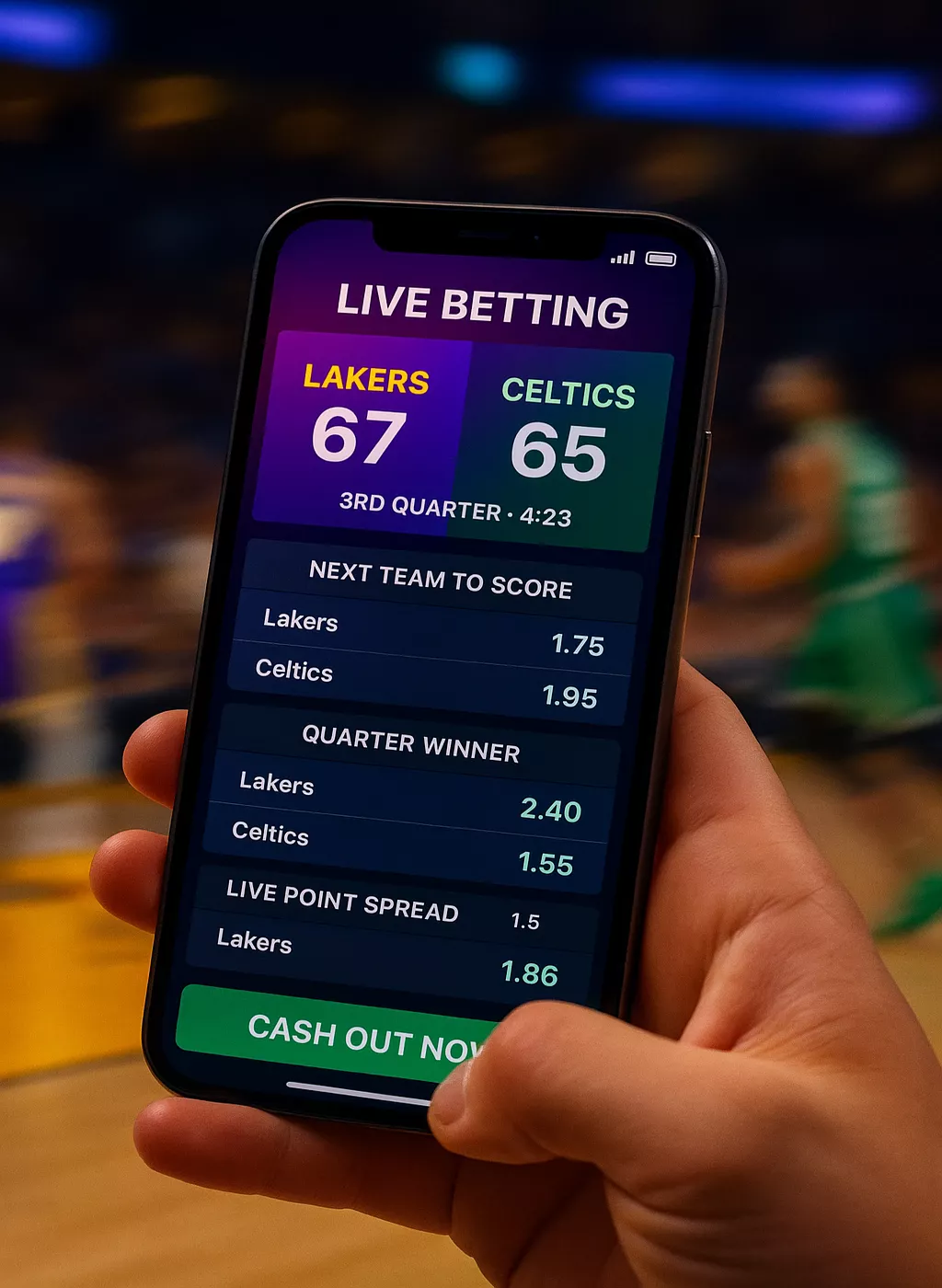
In-play betting has revolutionized sports gambling over the past decade. Instead of betting before the game starts, you’re betting while it’s happening, with odds updating constantly based on game flow.
The appeal is obvious you can react to what you’re seeing. A team comes out flat? Bet against them before the odds fully adjust. A soccer team goes down to ten men? The odds shift dramatically, but maybe not enough if you think the sending-off was harsh.
Live betting requires different skills than pre-match betting. You need to process information quickly, understand how odds respond to events, and identify when the market has overreacted or underreacted. It’s pattern recognition and quick math under pressure.
Cash-out functionality has become standard on live bets. If you bet a team pre-game and they’re winning comfortably at halftime, you can cash out for guaranteed profit smaller than your potential full payout. If they’re losing, you can cash out to minimize losses rather than letting it ride to zero.
The math on cash-out is never quite as good as betting both sides yourself, but the convenience is real. Most bettors are willing to accept slightly worse numbers in exchange for one-click settlement. Bookmakers love this because they extract value every time someone cashes out.
Live betting odds carry wider margins than pre-match odds because there’s less time for the market to achieve efficiency. A pre-match spread might have 4.5% margin, while the live equivalent during the game could be 6-8%. You’re paying for the privilege of betting in real-time.
Choosing the Right Market: Strategy Over Randomness
The biggest mistake new bettors make is treating all markets as equally valid opportunities. They’re not. Some markets are sharp and efficient with small edges. Others are soft with massive bookmaker margins designed to exploit casual action.
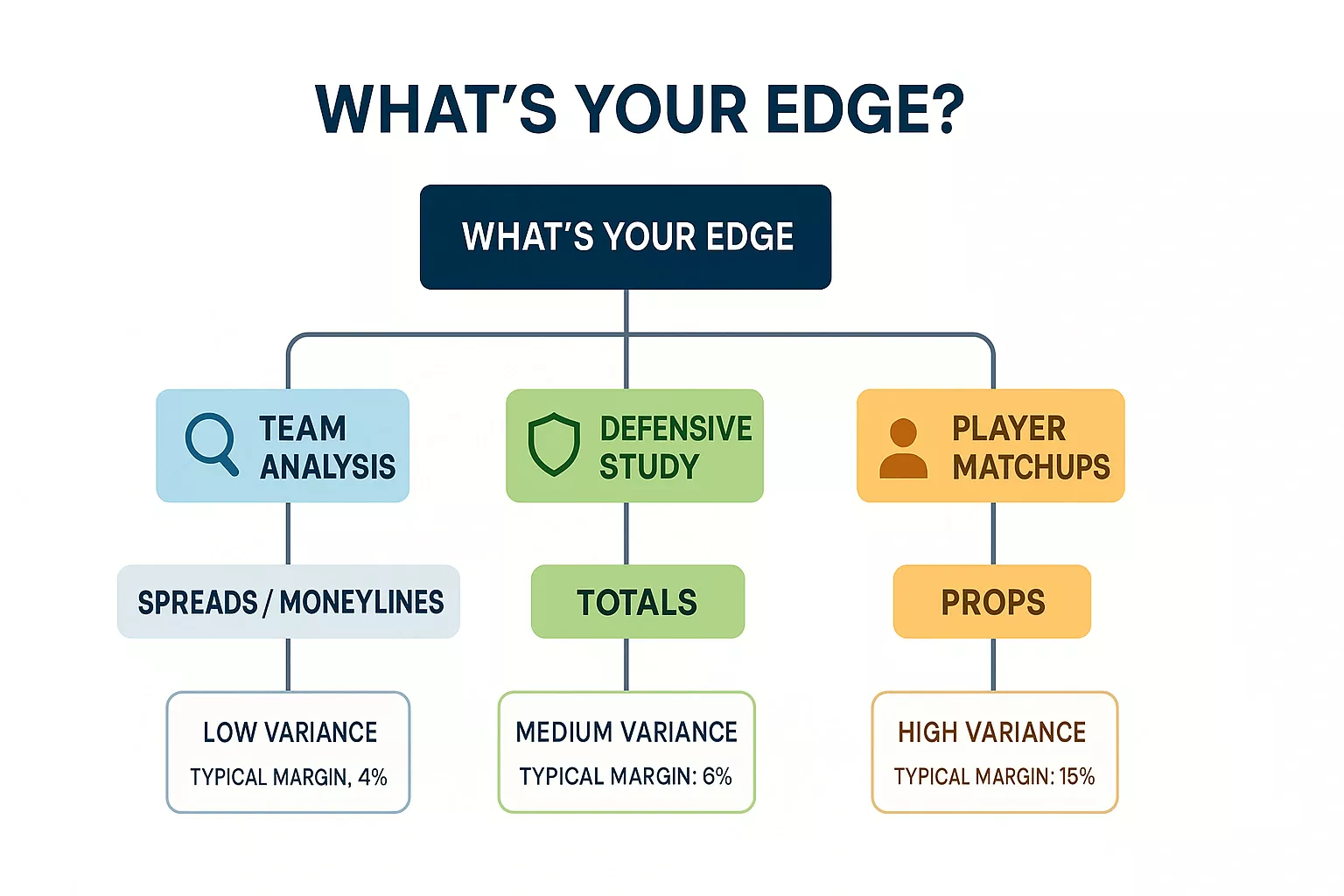
Match your knowledge to the market. If you study team defenses obsessively, totals betting might be your edge. If you understand individual player matchups, props could work. If you’re great at evaluating overall team strength but struggle with specifics, spreads and moneylines are probably better.
Consider variance and bankroll. Parlays and correct score bets offer huge payouts but terrible odds and massive variance. Spreads and totals offer consistent, grindable action with lower variance. Your bankroll size should influence which markets you target.
Time investment matters. Researching dozens of player props takes more time than analyzing one game’s spread. Professional bettors can justify that time because they’re betting significant money. Casual bettors betting $20 probably can’t.
Don’t chase exotic markets just because they’re interesting. The sportsbook offers 1,500 markets on a single game because they profit from people betting markets they don’t understand. Stick to markets where you genuinely have an edge or knowledge advantage.
Common Mistakes: What to Avoid
The allure of complex markets leads people to overestimate their knowledge. Just because you can bet on “team to score in both halves” doesn’t mean you should. These exotic markets almost always carry higher margins than straightforward options.
Parlay addiction ruins more bettors than any other single mistake. The feeling of hitting a five-team parlay is intoxicating, but the math is unforgiving. Every additional leg added to a parlay increases the bookmaker’s edge exponentially.
Ignoring market efficiency is another trap. The NFL point spread is one of the sharpest markets in all of sports betting finding edges there is incredibly difficult. Some random Turkish basketball game has a fraction of the betting volume and analysis, which means softer markets but also higher risk of mispricing working against you.
Betting markets you don’t understand because they offer better odds is backwards logic. Those odds are better because the bet is harder to win. A +500 prop isn’t automatically better value than a -110 spread just because the number is bigger.
Final Thoughts on Betting Markets
Betting markets have evolved from simple win-or-lose propositions into a complex ecosystem of options designed to appeal to every type of bettor. This variety creates opportunity you can find markets that match your knowledge and style. But it also creates traps for the uninformed.
The essential markets moneylines, spreads, and totals remain the foundation for good reason. They’re liquid, relatively sharp, and offer reasonable margins. Master these before venturing into more exotic territory.
Advanced markets and props can be profitable if you have specialized knowledge that the market lacks. But they’re also where bookmakers build in the largest edges, because they know these bets appeal to casual action more than sharp money.
The key is treating market selection as strategic rather than random. Every bet you place should be in a market where you believe you have some edge, whether that’s knowledge, analytical skill, or faster information processing than the consensus. Betting random markets because they look interesting is just expensive entertainment.
Now you understand what all those numbers and options actually represent. Use that knowledge wisely, stick to markets where you have genuine edges, and remember that the bookmaker’s margin varies wildly depending on which market you choose. The same game can offer 4% margin bets and 25% margin bets your job is knowing the difference.
Maximize your potential on our wagering portal.
